



Benna Chrysler Dodge Jeep Ram

Blog / Comparisons

Blog

All Comparisons News Jeep Information Benna CDJR Ram Trucks Dodge Benna Chrysler Dodge Jeep Ram New Cars Chrysler Awards New Vehicles Ram Electric Vehicle News Safety and Technology Ram 1500 Service Wagoneer Jeep Wrangler Parts and Accessories History Chrysler Pacifica Grand Cherokee Wrangler Dodge Challenger Dodge Charger Electric Vehicles Features Grand Cherokee L Grand Wagoneer Specs Dodge Hornet Jeep Wagoneer Finance Gladiator Jeep Gladiator Events Superior Chrysler Dodge Jeep Ram Service Superior Used Cars Jeep Wagoneer S Partnerships Superior Chrysler Service Campaigns Dodge Durango Jeep Compass Jeep Grand Cherokee Ram 3500 Tips and Tricks Voyager
JP024_123WR_converted

The Car Connection Compares Wrangler vs Gladiator

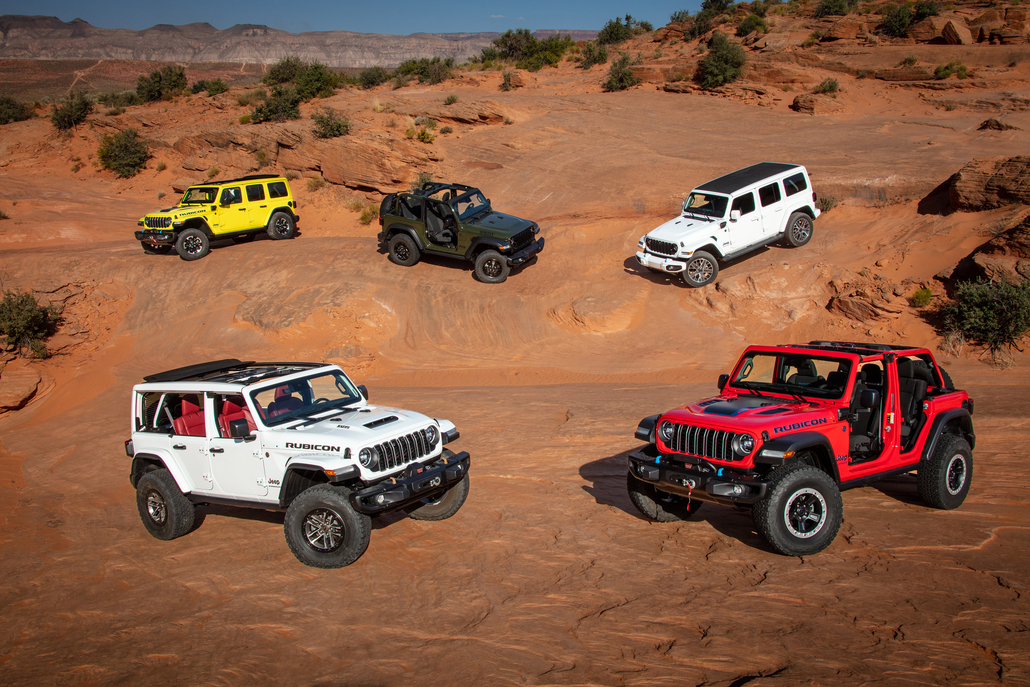
Comparison articles are common for automotive publications and websites, but you don’t often see a comparison of a pickup versus an SUV. The reason is apparent. Shoppers will likely know from the outset if they desire the non-height-restrictive, 270-degree cargo access, dirt and aroma-friendly aspect of an open bed, or the security of an enclosed cargo area. But, as in so many things, it can be different with a Jeep. The Wrangler and Gladiator have so many aspects about them outside of basic utility that Benna Chrysler Dodge Jeep Ram figures a comparison is in order. 2024 Jeep® Wrangler Rubicon X Similarities There are a lot of these. The Gladiator is basically a Wrangler with a 5-foot bed in the back. To accommodate the bed, the Gladiator stretches the Wrangler 4-door’s platform by almost 20 inches and is 30 inches longer overall. The passenger space is essentially the same, each providing the same impressive 38.3 inches of rear legroom and minimal, if any, differences in any other passenger space dimensions. The JL Wrangler's front end was changed to a shorter, rounded face to better accommodate a factory-installed front winch. The Gladiator continues with the previous JK Wrangler’s front styling, but the differences are primarily cosmetic and minor. One Powertrain vs Four Last year, Jeep sold three Wranglers for every Gladiator, allowing Jeep to make a business case for more Wrangler variations. The most significant differences are under the hood, where all Gladiators come with the 3.6-liter V6, which is shared across many Stellantis vehicles. It makes 285 hp and is novel in that it comes standard with a 6-speed manual transmission. The smooth-shifting 8-speed automatic is a $2,500 option. Fuel efficiency is not a calling card for either of these vehicles, and with the automatic, the Gladiator has an EPA-estimated city/highway/combined rating of 17/22/19. All three figures drop by one with the manual. The Wrangler also has the same V6 and 6-speed manual as its standard powertrain, and being smaller, it is rated at 18/24/20 depending on the trim. However, the Wrangler has other options, starting with the 2.0-liter turbocharged inline-4, which has a similar 270 hp but greater torque of 295 lb-ft. It also bumps up the mpg a bit at 20/23/21. The efficiency champ is the Wrangler 4xe, a plug-in hybrid that takes the same 2.0-liter engine and pairs it with a 134-hp electric motor, producing a total system power of 370 hp and 475 lb-ft of torque, which is a lot of torque for a relatively small vehicle. The 4xe is also rated at 20 combined mpg but includes 22 miles of electric-only driving, which is great if you can charge at home (no special charger required) and your daily commute is close to or less than that amount. Or, maybe, you want to go off-road without disturbing the nearby critters. For those of the “too much is never enough” school of thinking, there is the 6.4-liter (392 cu.in.) V8 on the Rubicon 392 that puts out 470 hp and 470 lb-ft. It will cover the 0-60 in a flat 4 seconds and the quarter mile in 12.8 seconds with the mpg penalty of 13/16/14, which assumes you are not drag racing. Capability and Towing The Gladiator’s long wheelbase makes it a more stable candidate for towing, with a maximum ability of 7,700 pounds. That is beyond the reach of any Wrangler. The Rubicon comes closest at 5,000 pounds, while other models are limited to 2,000 or 3,500 pounds. Both models come standard with the part-time Command-Trac 4WD system, which includes a 2.72:1 low range. Selec-Trac is a full-time system that automatically reverts to two-wheel drive on dry paved roads. The most off-road capable system is Rock-Trac, which has a 4:1 low ratio and can be used in both full-time and part-time forms. The Gladiator is no slouch, but the Wrangler wins as the most off-road capable vehicle, thanks primarily to its shorter wheelbase and rear overhang. The 2-door Wrangler is better still for the same reason. Both models have Rubicon and Mojave trim levels. True to the terrain of the places they are named after, the Mojave is built for high speed over rough surfaces. The Rubicon’s forte is slow-moving over very challenging surfaces. Each can cross over into the other’s lane to a lesser degree. What’s Inside The Wrangler and Gladiator dashboards are not identical but similar in concept. They have a flat, upright presentation, large physical controls, and hard, easy-to-clean surfaces. Both offer a 12.3-inch touchscreen powered by the well-regarded Uconnect5 interface. 68 “Badge of Honor” trails are built into the navigation system, and more can be added. Ultimately, it again comes down to how you plan to use your vehicle. Both are designed for play, but the Wrangler can generally play harder, while the Gladiator offers greater utility. Neither is like anything else on the road. To see the similarities and differences discussed up close, visit Benna CDJR and check out the Gladiator, Wrangler, and Wrangler 4xe for yourself.
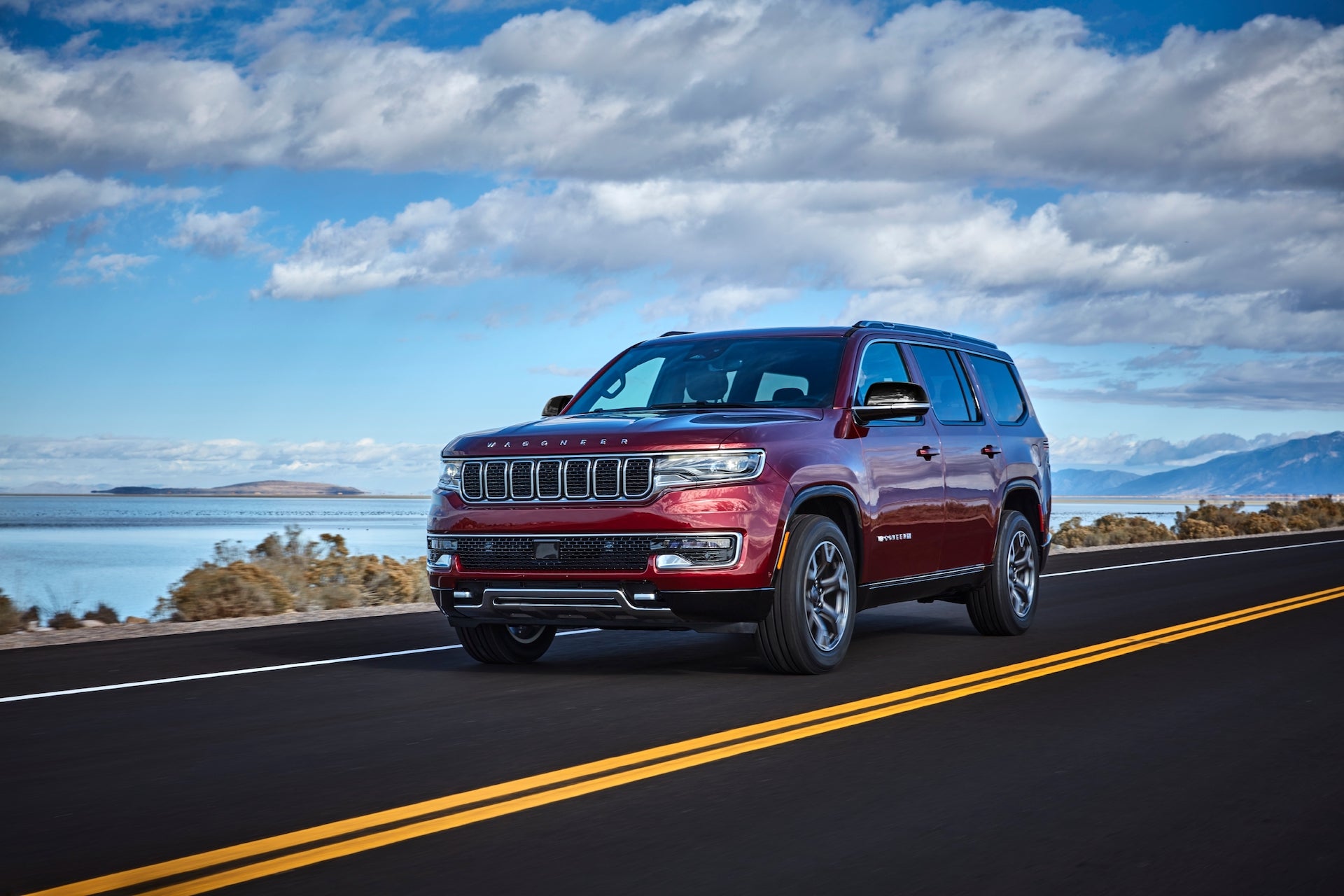
2024 Wagoneer Front View

Jeep Wagoneer vs Chevrolet Tahoe

The Jeep Wagoneer dates back to 1962, long before the term SUV existed, and it continued largely unchanged for 30 years. The market for such a vehicle was very small back then, and the Wagoneer found itself a niche market of Field & Stream subscribers and people who visited their country homes on the weekend. After it was gone, Jeep resurrected the Wagoneer name briefly a couple of times, but it wasn’t until 2022 that Jeep brought the Wagoneer back to fill its original category as a full-size three-row SUV. In terms of sales and name recognition, its biggest competitor is the Chevrolet Tahoe, which first appeared just a few years after the original Wagoneer left. In this post from Benna Chrysler Dodge Jeep Ram, we compare the 2024 Wagoneer to the Tahoe. Wagoneer vs Grand Wagoneer Jeep created a little confusion when it introduced both the Wagoneer and Grand Wagoneer. The Grand Wagoneer is on a whole different level in terms of luxury and is meant to compete against luxury-brand models, but its size is identical. However, there are longer versions of both models called the Wagoneer L and Grand Wagoneer L, which are Suburban-sized. The Tahoe is simply a shorter version of the Suburban. Big News Smaller Engine Hood The biggest news for the 2024 Wagoneer is that its 5.7-liter V-8 has been replaced by the new Hurricane 3.0-liter twin-turbo inline-6, the sole engine across the model line. The Hurricane significantly out-powers the V-8 with 420 horsepower and 486 lb-ft of torque. It also outpowers Tahoe’s standard 355 horsepower and 383 lb-ft 5.3-liter V-8. Adding insult to industry, it also outpowers the Tahoe’s optional 6.2-liter V-8, which produces an identical 420 horsepower but falls short in torque with just 460 lb-ft. Conversely, the Tahoe’s available 3.0-liter turbodiesel bests the Hurricane with 495 lb-ft of torque but has significantly less horsepower. When comparing standard engines, the power differences are apparent in acceleration, with the Wagoneer showing 0-60 mph in 6.3 seconds compared to 7.5 for the Tahoe. It also makes itself known in towing capacity, which is up to 10,000 pounds for the Wagoneer compared to 7,800 lb for the standard-engined Tahoe, rising to 8,400 lb. with the optional diesel engine. The Wagoneer is also a little less thirsty with an EPA estimated city/highway/combined mpg rating of 16/19/23 for a 4WD mode versus 15/20/17 for the 5.3-liter V-8 4WD Tahoe. Combined with a larger fuel tank, this results in an estimated range of 610 miles in the Jeep versus 480 for the Chevy. However, the Tahoe’s optional turbo diesel takes the efficiency crown with 20/26/22. Of course, diesel is also 11% more expensive than regular gasoline on average in Wisconsin. You wouldn’t select either of these models for a run on the Rubicon Trail, but for the occasional excursion off-pavement and our abundant snow, 4WD is a $3,000 option for both models. If you need a two-speed transfer case, it is standard with 4WD on the Tahoe but comes to the Wagoneer via a Heavy-Duty Trailer-Tow Package that contributes to its large towing capacity mentioned above. The Great Indoors Both models specialize in vast interiors, with a seating capacity of eight, or seven if one opts for 2nd-row captain’s chairs. Adults will be perfectly fine in the 3rd row, though the Wagoneer’s 3rd-row legroom of 36.6 inches is 1.7 inches over the 3rd row in the Tahoe. With all the seat backs up, the Waggoner's 27 cubic feet of cargo space is one cubed foot over the Tahoe’s. That turns around when you start folding seats, and when turned into 2-seaters, the Tahoe has 123 cubic feet compared to 117 for the Wagoneer. The Wagoneer shares its dashboard layout with the Grand Wagoneer, while the Tahoe shares its with the Silverado pickup truck. The result is a decidedly more luxurious dashboard in the Jeep. The Wagoneer has a higher starting MSRP, which is close to the Tahoe LT, and one upgrade from the base LS. As such, both moth models are similarly equipped. Both have 10-inch touchscreens, onboard navigation systems, wireless smartphone compatibility, leather seating, and power adjustments for the driver and front passenger. There are trade-offs. For example, ventilated front seats are standard on the Wagoneer but need another upgrade for the Tahoe. While the base Wagoneer has a 10-speaker audio system, the Tahoe LT has a Bose ® -branded 9-speaker system. Of course, both models have trim hierarchies that add more features as you go. But overall, you will still get a better drivetrain and nicer interior with the Wagoneer. Visit Benna CDJR for a Wagoneer test drive and see if you don’t agree.

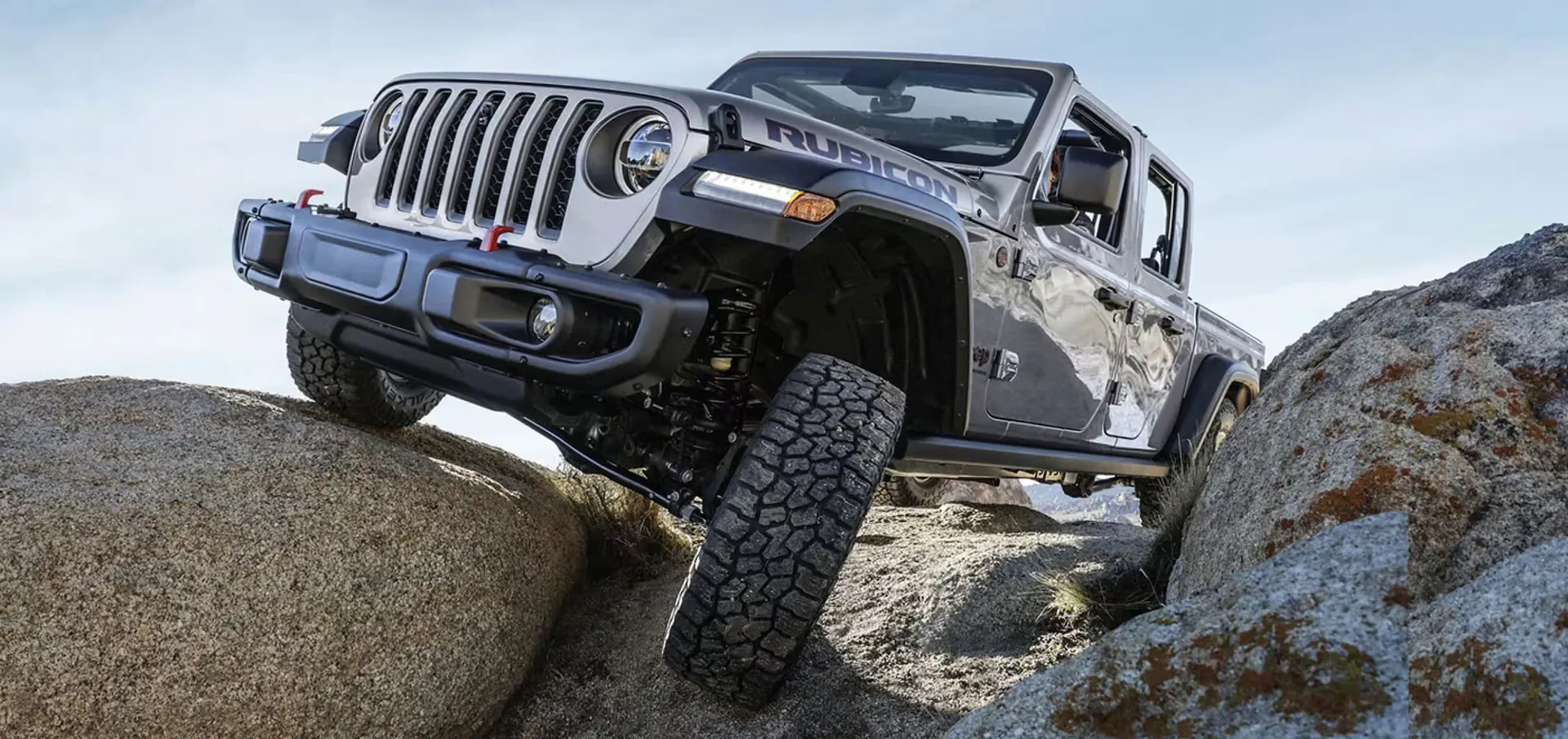
Off Road with the New Jeep Gladiator Rubicon

Gladiator Off-Road Specialists: Willys vs Rubicon vs Mojave

Jeep has long been the most off-road-focused automotive brand in the U.S. if not the world.  And yet, a few decades ago, many people found limitations in their Jeep Wrangler's abilities, particularly when following rugged trails mostly traversed by dirt bikes and ATVs. They turned to the aftermarket, often spending $6,000 to $10,000 on local mechanics, welders, and specialized parts suppliers. Wanting a piece of this business and figuring a purpose-built Jeep would work better than a modified one, a few Jeep true believers in the company managed to convince wary suits to give it a go, and they named the result after one of the most famous trails for such hardcore off-roading, the Rubicon.  A wild success, Jeep gave the same treatment to the Gladiator after its debut. Today, there seems to be no end to the number of extreme off-road versions of pickup trucks, but the Jeep Gladiator has the best platform from which to start. There are nine distinct Gladiator trim levels, all of which are superior off-road machines. Still, models like the Willys, Mojave, and the Rubicon all promise additional off-road capability.  Is there an obvious choice if you want the most off-road capable Gladiator?  The answer is no.  And that is a good thing because all off-roading is not the same. Jeep has it covered, and Benna Chrysler, Jeep Dodge Ram is here to explain which is best at what. Gladiator Willys The Willys derives its name from the World War II - era manufacturer that submitted a winning proposal for the original “General Purpose” vehicle to the U.S. Government and subsequently built a majority of them. The Gladiator lineup includes both the Willys Sport and the Willys.  The first is one step up from the base model, while the Willys is in the middle of the Gladiator hierarchy. The Willys Sport represents the first step toward increased off-road ability due to its 32-inch LT255/75R17C Mud-Terrain Tires and a Trac-Lok ® Limited Slip Rear Differential.  The latter improves off-road ability by locking the rear wheels at about 80%, making it very useful in slippery on-road conditions to maintain stability. The Willys model includes these features plus some non-off-road-focus upgrades from the Sport S and Freedom models, such as keyless entry and the Uconnect ® 4C NAV with 8.4-inch Touchscreen with Navigation and Apple CarPlay ® and Android Auto™ Compatibility.  The Willys has more than enough off-road ability for the off-roader who enjoys challenges but isn’t overtly looking for trouble.  For those trouble seekers, Jeep has a choice of models. Gladiator Rubicon Just outside picturesque Lake Tahoe, California, is a 22-mile destroyer of off-road vehicles known as the Rubicon trail. This “crown jewel of all off-highway trails.” is rated 10 out of a scale of 10 in difficulty and was originally considered the most difficult off-road trail in the world.  This highly technical trail is a mecca for a wide range of off-road vehicles, such as ATVs and dirt bikes. For street-legal vehicles, the challenge is just to get through it without breaking down or needing to be winched to safety.  Boulders and other extremely uneven terrain routinely hang up vehicles with long wheelbases and /or insufficient wheel articulation. Most important to realize, though, is that the tough parts of the course are, by necessity, taken at very slow speeds. Hiking through them is faster. This kind of off-roading is what the Gladiator Rubicon is designed for. A key feature of the Gladiator Rubicon is sway bars that can be disconnected by a dash control to increase wheel articulation. Even then, on its namesake, any one of the wheels will occasionally be suspended in air. To maintain forward motion in these instances, both the front and rear differentials are fully locking. Being able to go slow with precision is more important than going fast. Hence, another crucial factor is the Part-Time Rock-Trac ® 4:1 Low Transfer Case with up to an 84:1 Crawl Ratio to help make all your accelerator pedal adjustments gradual and precise. Another helpful feature available on the Rubicon is the TrailCam-Off Road camera, which enables the driver to see what the underside will encounter when no spotters are available. In addition, the front steel bumper is designed to carry a winch because no one is perfect. Skid plates protect the front bumper, sway bar components, fuel tank, and transfer case. A terrain-specific Off-Road Plus Mode helps the driver manage engine torque and braking in specific circumstances. Gladiator Mojave Off-roading in the Mojave desert and similar areas is the opposite of moving at a walking pace. This is the type of off-roading you see in videos of the Baja 1000 and other world-class rallies. It is fast, rough, and not uncommon for the vehicle to “get air”. Needless to say, this activity gives the vehicle quite a beating, and yet this is the kind of off-roading that is the Gladiator Mojave’s specialty. Consequently, much of the Mohave’s unique components are designed to withstand fast and hard impacts. This starts with FOX 2.5-inch Internal Bypass Shocks featuring external reservoirs to provide enough fluid for the high levels of damping control needed. The track width is also extended both to allow room for those reservoirs and to increase lateral stability. Front Hydraulic Jounce Bumpers soften the blow when even the shocks bottom out. High-clearance fender flares give room for vertical wheel movement. The rear differential fully locks for improved traction, but not the front, as it is inconsequential in this kind of activity. In contrast to the Rubicon model, the low-speed transfer case is designed to operate at speeds up to 50 mph. The Mojave skid plates are designed to withstand harder high-speed impacts and protect the shock reservoirs and the fuel tank, transfer case, and other components. Inside, the seats are reshaped with larger side bolsters to help keep you in place. Which Takes You Where You Want to Go? For all of their specialized abilities, all of the above models are still designed to take care of you when you are not playing on the trails. Thus, they must be adept at normal road-going, hauling things, and keeping you comfortable inside. The best Gladiator for you rests entirely on what you plan to do with it. The Willys will excel in many kinds of off-roading, including those that leave other 4x4 models behind, even as it costs less than the two specialists. The identically-priced Rubicon and Mojave are both extremely capable in conventional off-road use but are ultimately designed for their respective specialties. On the road, the Gladiator Mojave even has the advantage of being best prepared at hitting potholes at speed. Though this covers the general differences between these off-road models, our professional Jeep sales staff can certainly go into more detail. If that sounds interesting to you, pay a visit to Benna Chrysler Jeep Dodge Ram and see the Gladiator model up close.  Note that as of this writing, Gladiator models are currently offered for 15% off the MSRP. Happy Trails.

Contact Us

Fill out this form below and we'll contact you shortly
*Required Fields