



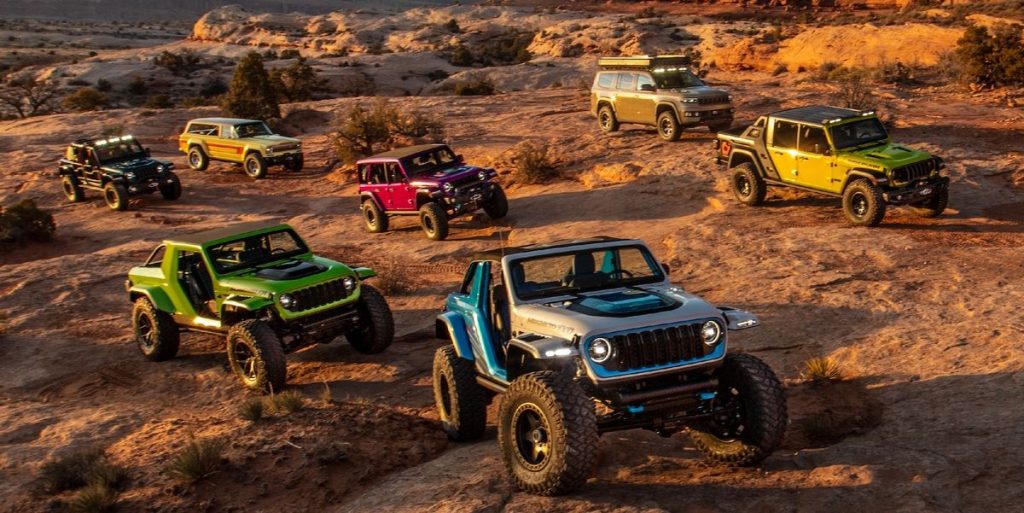
It will come to little surprise to anyone that our Benna CDJR Jeep owners are among the most enthusiastic about their vehicles. Every spring, Jeep fans meet at beautiful Moab, Utah, for the Easter Jeep Safari. It’s a big off-road party where the Jeep faithful meet, compare their rides, and give them exercise. Naturally, with so many Jeep fans present, Jeep itself made a splash with no less than seven concept vehicles.
The Wrangler is the heart of Jeep and thus made up the base of four of the seven concepts but also present were the Gladiator, Grand Wagoneer, and even a very modified 1978 Cherokee. Drivetrains were also diverse, with a mix of gasoline-powered engines and electron-pushing EVs driving the fat off-road tires. Here are our favorites.
Magneto 3.0
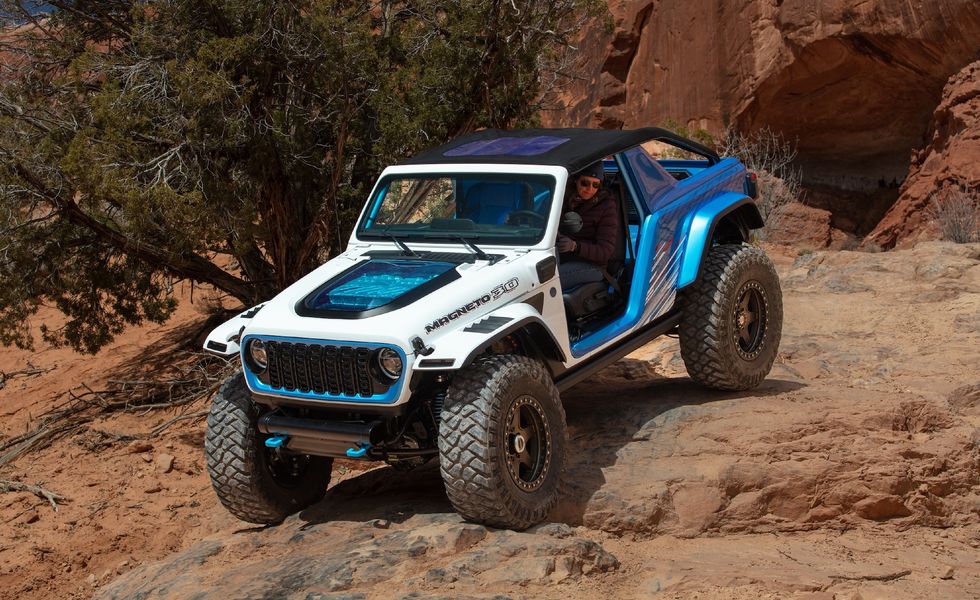
This was a final encore for a concept that has been making the rounds since 2020. It is a two-seat Wrangler concept driven by a single electric motor sending power through a six-speed transmission. It appeared this year in a very surf-like blue and white exterior. Possibly showing off bits and pieces that will make it to the upcoming production Recon EV, the Magneto features dual driving modes. The mode for distance and conventional driving limits power to 285 horsepower and 273 lb-ft of torque, which closely mirrors today’s V-6-powered Wrangler. The other mode is very “other” indeed, with 650 horses and 900 lb-ft, In that mode, the Magneto can start in any of its six gear ratios, so the transmission acts as a bit of a drive mode selector, with 1st and 2nd devoted to slow rock crawling, 3rd and 4th for faster desert, 5th and 6th for highway cruising. Such a drivetrain arrangement could be perfect for future Jeep EVs.
Scrambler 392
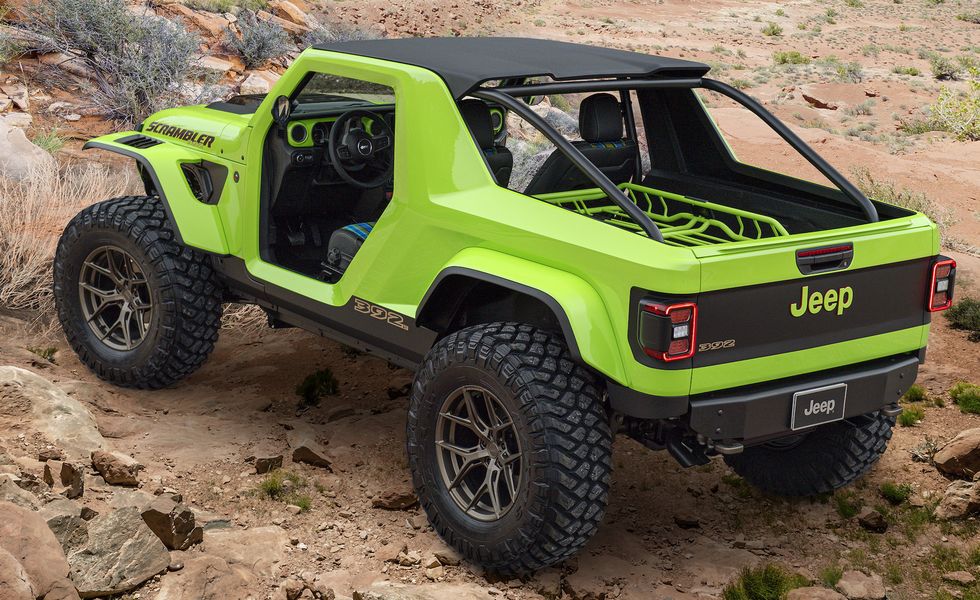
At first glance, the Scrambler 392 looks very much like a lime-green Magneto 3.0, particularly with the 2-seat configuration and hexagonal doorless access created by the slanting B-Pillar bodywork over a roll bar. But this is built off a 4-door Wrangler, so behind its two seats is a longer wheelbase and open bed with a tailgate courtesy of the Gladiator. As the name implies, under the hood is the 392 cubic inch V8 available on the Wrangler Rubicon. Its 20-inch wheels are dwarfed by 40-inch tires behind, which is a new Mopar AccuAir air suspension that can raise the vehicle between 1.5 and 5.5 inches at any time via either a control switch inside or by smartphone app.
1978 Cherokee 4XE
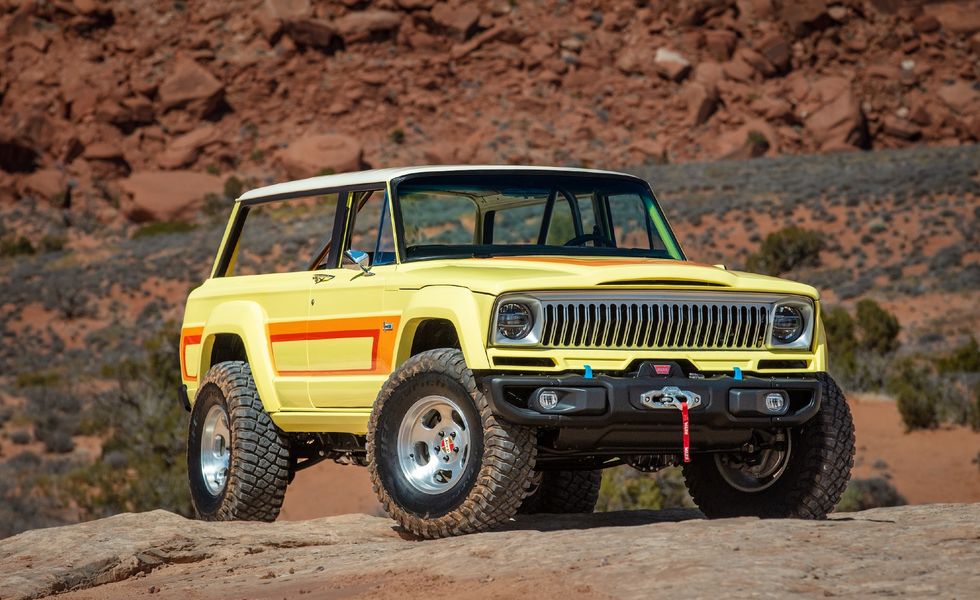
This is a mash-up of a vintage Cherokee body over a Wrangler 4xe Plug-in hybrid chassis. The yellow exterior goes full nostalgia with 70s exterior graphics and slotted deep-dish mag wheels. The Cherokee’s original blue-tint windshield is in place, as are the wind vents, which can only be thought of as ironic since the rest of the vehicle is window-free. Besides the turbocharged 2.0-liter four and two electric motors, a 4xe also donated its dash and steering wheel though with a continuation of the exterior color scheme. It is a great tribute to an iconic mode.
Grand Wagoneer Overland
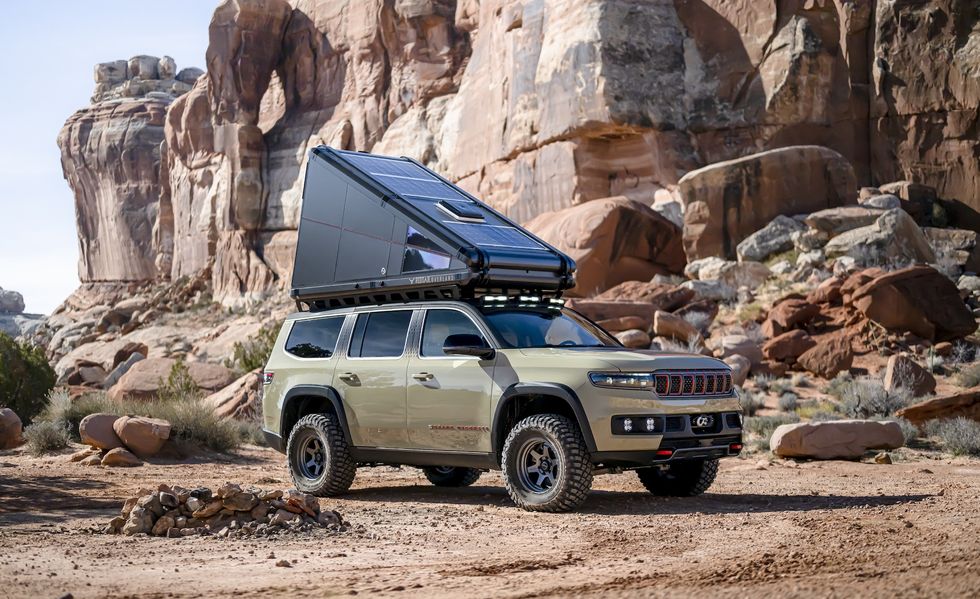
Instead of showing up Land Rovers in high-rent shopping districts, this Grand Wagoneer is ready to take two people deep into no man’s land while still providing plush accommodations overnight for two. The latter is courtesy of a $30,000 RedTail Overland roof tent complete with carbon-fiber walls, solar panels, double-pane windows, and climate control. Normally you’d access the tent via a ladder outside, but here you enter from the Grand Wagoneer’s repositioned rear sunroof. And there is no standing on the upholstery to get up there because this Overland takes its accommodations for two to heart by removing the 2nd and 3rd-row seats and creating a living room with a throw rug, bean bag chairs, throw pillows, and a reconfigured version of the Grand Wagoneer’s available McIntosh entertainment system. The overland is powered by the Grand Wagoneer’s available 3.0-liter Hurricane Twin-Turbo inline-6 producing 510 horsepower and 500 lb-ft of torque. The exterior is Industrial green, facing into gunmetal details. In front is an integrated Warn winch and two sets of laser lights, and the whole thing rolls on 18-inch wheels with 35-inch tires.
If you’d like to see even more, have a look at this video from YouTube
These are four of what we found to be the most interesting concepts Jeep brought to Moab. While all of these vehicles involved some very extensive customization, they sport plenty of off-shelf Mopar accessories for the details, including Warn winches, external lighting, custom wheels, and skid plates, among others. If you want to make your Jeep or Ram or any other Stellanis vehicle a little more you, check out the Benna CDJR Mopar accessories on our site or at our Superior, Wisconsin location.
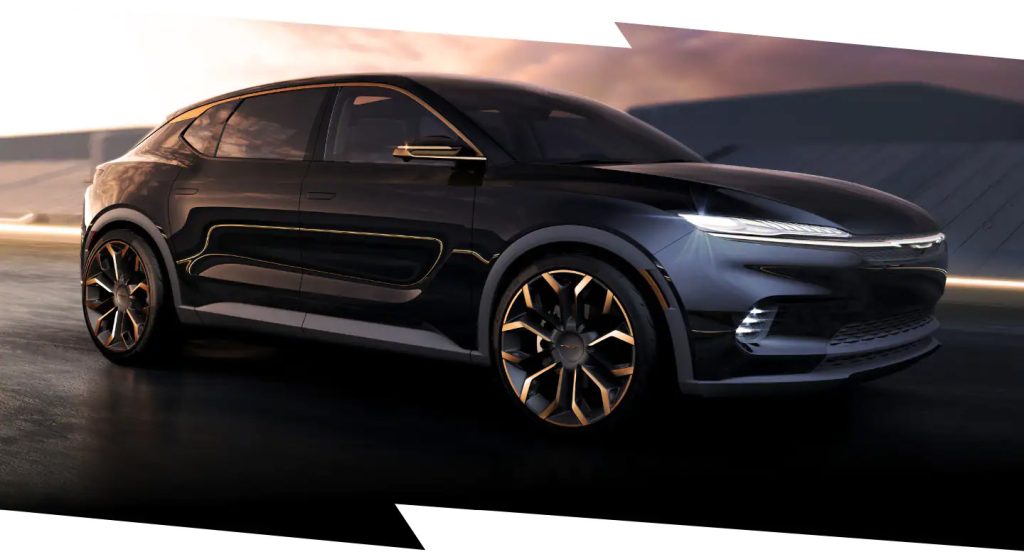
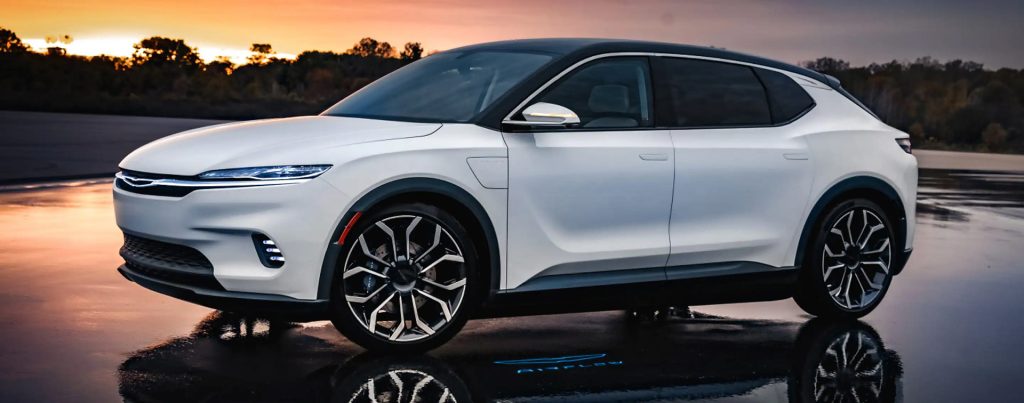
Chrysler has shown a preview of its first EV, which is scheduled to silently roll onto our Benna DCJR showroom in 2024 as a 2025 model. It is a beautiful mid-sized crossover similar in size to the Mustang Mach-E and EV Blazer. Unlike those vehicles which take on styling cues of their namesakes, the Airflow takes Chrysler in an all-new design direction. Even the Chrysler winged badge is displayed in a very abstract manner on the front.
New Car, Old Name
While the name “Airflow” seems quite appropriate for an EV designed to operate efficiently on the highway, the name actually dates back almost 90 years to the boldly-designed Chrysler production models of 1934 – 1937. Other cars of the time had radiator grilles, separate headlight pods, outboard fenders, and running boards. By contrast, the 1934 Airflow featured integrated headlights, an art-deco grille flush with a curving hood, bodywork over the rear wheels, and other design elements intended to celebrate the car’s ability to flow through the air around it. The design was about 25 years ahead of its time. Depression-era shoppers still able to buy a new car didn’t know what to make of it, and too few of them wanted to take chances. The 1938 Chrysler reverted to more traditional styling.
Appears Close to Production
Such will not be the fate of this Airflow. It, too, appears to be a child of the wind tunnel but with some distinctive character lines along its side and nothing that could be considered controversial. In fact, while the Airflow is considered a concept, there is very little to the exterior that does not look ready for production. Until recently, the LED front trim incorporating the badge would have been considered concept eye-candy but is fully
production possible now. The wheels will likely come down to a more practical and range-friendly size. Inside, we can expect the interior to be toned down to a more affordable level, the steering wheel to get rounder, and the rear bucket seats to give way to more useful 3-across seating. For the most part, however, this looks to be what we can expect for sale in 2024.
Just a few Mechanical Details
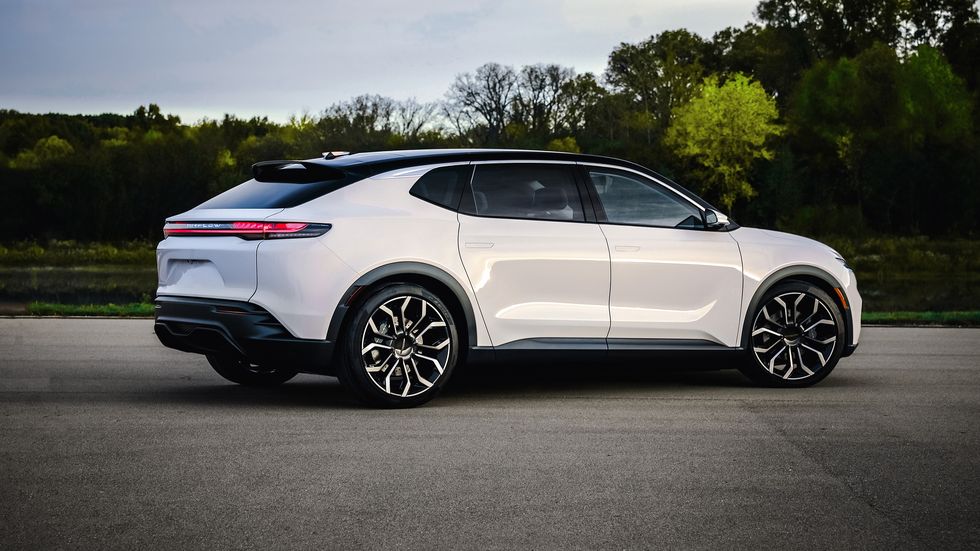
The concept features all-wheel drive with one 201 horsepower motor in the front and another in the rear. This is likely an optional or upper trim-level setup with a single-motor, rear-drive arrangement as standard. Under the Airflow’s floor is a 118.0 kWh battery pack Chrysler estimates to provide a range of between 350 and 400 miles. Figure the single-motor model for the higher end of that range.
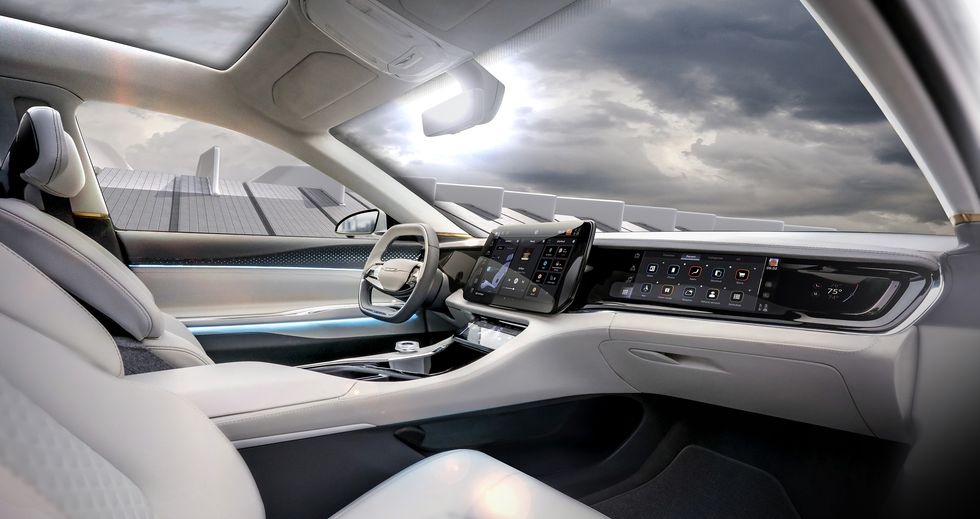
Under a glass roof, the white interior looks very light and spacious. The dash is a series of LED displays, including one for the front passenger, and there are additional touch displays on the front seat backs for rear passengers. The crystal starter switch on the flying center console is quite attractive though its placement appears begging to be accidentally hit by your right arm. If these features make it to production, they will likely be reserved for the flagship trim level. What the Airflow indicates, more than anything else, is that Chrysler is ready with an EV platform with an attractive body on top of it that is ready to appear in Benna CDJR’s inventory in about a year. And once you have a viable EV platform, other models can follow. For now, we are really looking forward to the production Airflow and hope you are as well. If you are interested in updates on the Airflow and when it will arrive in our showroom, contact us, and we will put you on our waiting list.
Synthetic vs Conventional Engine Oil

Every time you have your oil changed, whether it is at BennaCDJR or somewhere else, you hear the same question: Synthetic or conventional? And you probably ask yourself: Should I go with synthetic instead? Is there really an advantage? Let’s find out.
Conventional motor oil begins as crude oil that is formed from the refinement process. Synthetics can also trace beginnings as distilled crude oil but are formed from a very different process. The source oil is completely broken down and then rebuilt with artificial petroleum molecules. Looking at conventional motor oil under a microscope reveals molecules with different shapes, sizes, and structures. By contrast, synthetic oil shows molecules of nearly the same size and structure. There are different kinds of synthetic oils with very different properties, but synthetic motor oils are known as polyalphaolefins (PAOs). So any future references to synthetic oil will be about PAOs.
Synthetic Oil Advantages

The American Automobile Association conducted a study comparing synthetic and conventional oils. The short answer for their results is that, on average, synthetic oils performed 47% better than conventional motor oils. Here are the specifics:
Greater Engine Protection
Fully synthetic oils are far more resistant to breaking down from both heat and time, thus will protect your engine for longer. All things being equal, you are more likely to have an engine reach very high miles, such as 200K – 250K miles with synthetic oil.
Cleaner Engine
All conventional oil contains impurities, and these impurities can form deposits. Over time, these deposits will build up in the oil to the point they form a sludge which reduces the oil’s effectiveness. It is one reason you change your oil, but it can start forming before the change. By contrast, synthetic oil contains far fewer impurities and resists sludge and deposit formation.
More Stable Viscosity
Synthetic oils maintain their viscosity better than conventional oil. So it is less prone to get thinner in heat or thicker in the cold. Consequently, it protects your engine more constantly despite ambient and engine temperature.
Longer Lasting
Because of its greater resistance to breaking down, synthetic oil stays effective longer than conventional oil. This can be as much as twice as long, with some brands touting change intervals as long as 15,000 to 25,000 miles. Even so, Stellantus still recommends you change your oil at specified intervals. Also, upgrade your oil filter quality if you plan to retain it for a longer period.
Turbocharger Protection
Because it uses exhaust gases, turbochargers can generate high levels of heat, which can challenge engine oil’s effectiveness. Because synthetic oil is more heat resistant, it is often recommended or at least considered a good idea for turbocharged engines.
Synthetic Oil Disadvantages

- Higher Cost
Synthetic oil sometimes costs twice as much as conventional oil. Unless you stretch your oil changes beyond manufacturer recommendations, the overall cost of oil changes will be higher.
- Though not as common as they used to be, engine break-in periods were a period at the beginning of an engine’s life in which initial friction smoothed out any rough spots in the engine. Ironically, because synthetics lubricate better, they can actually slow down the engine break-in process.
We should point out that there is a myth that once you have synthetic oil in your car, you never go back to conventional oil. There is no truth to this. It’s perfectly safe to switch between or mix synthetic and conventional oil. In fact, conventional oil and synthetic blends are available, which predictably bridge the gap in increased effectiveness and higher cost.
Is synthetic oil better for your engine? In a word: “Yes”. In a few words: “Yes, but it will cost more”. If you want a better chance of your engine lasting to 200K miles or 250K miles, synthetic oil would be a good idea. On the other hand, if you regularly trade your car in at 50-60K miles, it may not be worth it to you. If you still have questions regarding synthetic oil for your model and your goals for it, contact one of our Benna service professionals for specific advice.

Companies work hard at their brand image. It goes into their logo, how they advertise, who their spokespeople are, the events they sponsor, and so on. It is all so when someone mentions the brand name, one instantly conjures an image and associated values. But it all goes down the tube if the products don’t meet the image. That’s why Benna CDJR is proud to announce Dodge as the winner of KBB’s Best Performance Brand and most refined Brand Image Awards.
Brand Image Backed by Brand Reality
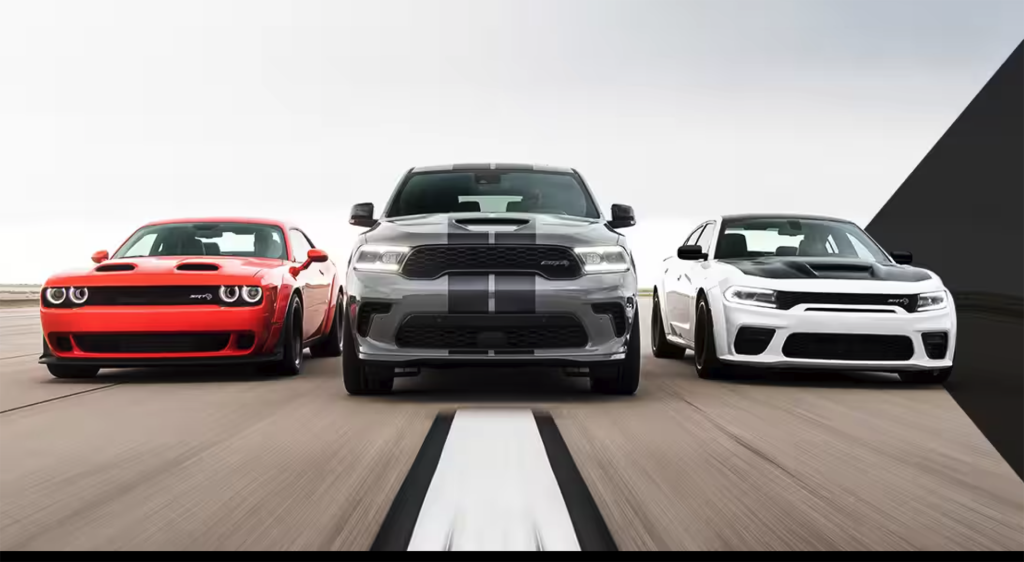
Dodge has long presented itself as the brand of American muscle cars, led by the rear-drive Charger sport-sedan and the rear-drive Challenger coupe. Models that didn’t deliver on that image, like front-drive minivans, compact, and mid-size sedans, were sent packing.
The Durango 3-row crossover has been given the Dodge treatment as exemplified by the 2023 Dodge Durango SRT Hellcat, powered by the Challenger Hellcat’s supercharged 6.2-liter HEMI® Hellcat V-8 engine producing 710 horsepower and 645 lb.-ft. of torque. No other model in the segment comes close to that kind of power, firmly establishing Durango as the “American Muscle” of its segment.
In saying farewell to the two models most responsible for its image, Dodge issued seven “Last Call” special editions of Chargers and Challengers with specific performance and styling packages. This is topped off by the final Last Call model, the Dodge Challenger SRT Demon 170, boasting an astounding 1025 horsepower on E85 fuel.
The Study that Led to the Awards
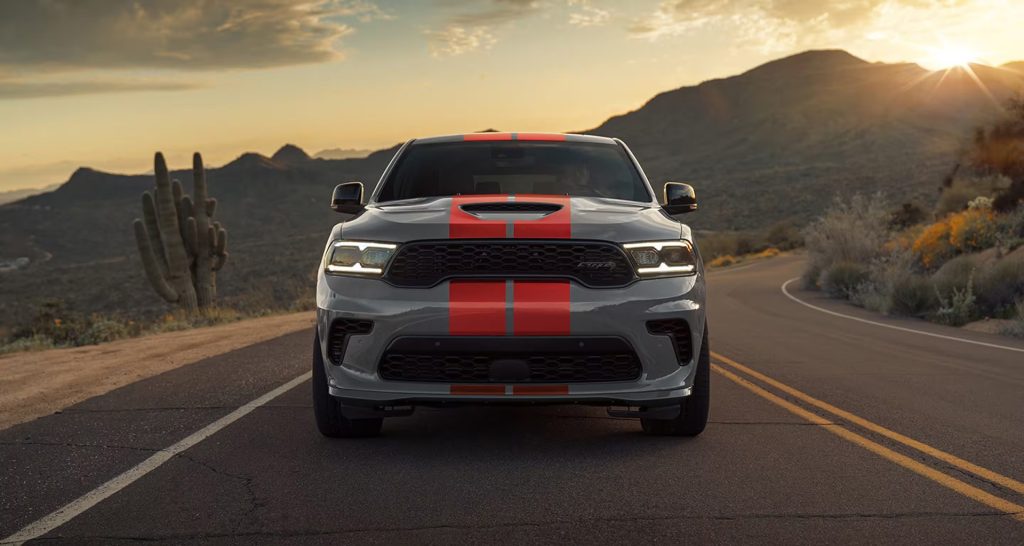
Dodge products truly drive the image, and people notice. This new honor marks the fifth consecutive year Dodge has been recognized with a KBB.com Brand Image Award. The Awards are based on consumer automotive perceptions found in Kelley Blue Book’s Brand Watch tracking study. The study, in turn, gathers data from more than 12,000 in-market new-vehicle shoppers annually who access KBB.com. It offers insight into how shoppers perceive important factors driving their purchase decisions, including brand/model familiarity, impressions, as well as brand loyalty among new-car shoppers. The study tracks 12 factors important to shoppers across all segments.
The Best Performance Brand Award was based on ratings of non-truck models strictly on the perception of “Driving Performance”. Kelley Blue Book cited Dodge models as “bred for high performance, featuring massive power and torque for an exhilarating, unforgettable driving experience.” The Most Refined Brand Award is broader Also, based on the ratings of non-truck models, it hones in on four factors: driving comfort, interior layout, technology, and prestige/sophistication.
“We are honored by this recognition from Kelley Blue Book, especially as we double down on our brand’s commitment to performance,” said Tim Kuniskis, Dodge brand chief executive officer – Stellantis. “The all-new Dodge Hornet GT is shipping now to dealerships, disrupting the status quo of the mainstream CUV segment with class-exclusive and best-in-class performance features.”
Future Muscle
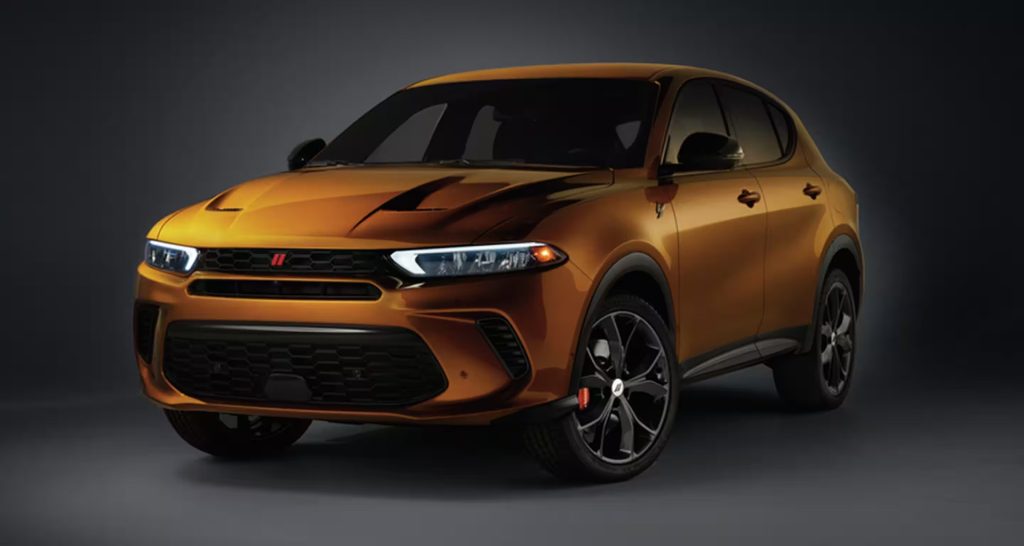
Indeed, the Dodge Hornet enters the popular mid-size crossover segment in typical Dodge fashion but with a foot planted in the future. The halo model is the R/T Plug-in hybrid with class-leading 288 horsepower and 383 lb.-ft. of torque, plus “PowerShot” which supplies a temporary burst of 30 additional horsepower.
Looking a little further into the future is the Charger Daytona SRT Concept, which shows electric propulsion with a vehicle that looks, drives, feels, and even sounds like a Dodge.
As long as there is Dodge, there will be American Muscle on the road. We invite you to visit Benna DCJR soon to see the newest Muscle in the form of the Hornet and Durango, as well as the last of the iconic Charger and Challenger models. We can even track down the nearest of any of the seven “Last Call” models.
Dodge is here to stay, but it will be going through some changes. As the collection of Charger and Challenger “Last Call” models indicate, these icons will be discontinued after the 2023 model year. Filling their space here at Benna CDJR will be the exciting new Hornet, including a plug-in hybrid model, and Dodge promises electrified future vehicles that will deliver on Dodge brand expectations. Still, the site Autoevolution decided this is a good time to list what they consider are 50 of the best Dodge models, starting with models ranked 41st through 50th, which we will recount here.
50. 1978 Dodge Magnum
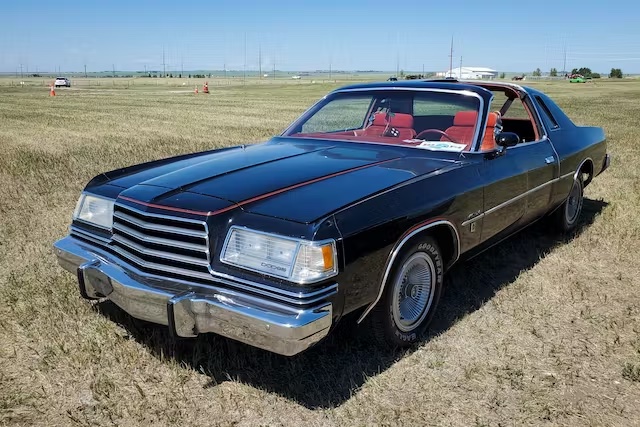
The mid-70s were a difficult time for the muscle cars created during the previous decade. Emissions regulations were choking high-powered engines, and it would be a while before innovations such as electronic fuel injection, multi-valve heads, turbocharging, and other technologies brought the power back.
Perhaps no vehicle personifies the 70s shift in focus more than the Magnum. By 1975, the Charger had already made the transition from muscle car to “personal luxury coupe”, a genre created in the 60s but truly flourished in the depowered 70s. Emphasis instead was on plush interiors, luxury car-derived features, and T-Tops. The name change and a styling make-over sealed the deal. The Magnum was briefly available with a 400 cu in a big block but thereafter soldiered on with the 318 or 360 cu in V8s, making 159 and 195 horsepower, respectively.
The Magnum did succeed in keeping Richard Petty in Mopar vehicles for a few years longer. Still, Petty did manage seven top-five finishes in his 17 races with the Magnum.
49. 1949-52 Wayfarer Roadster
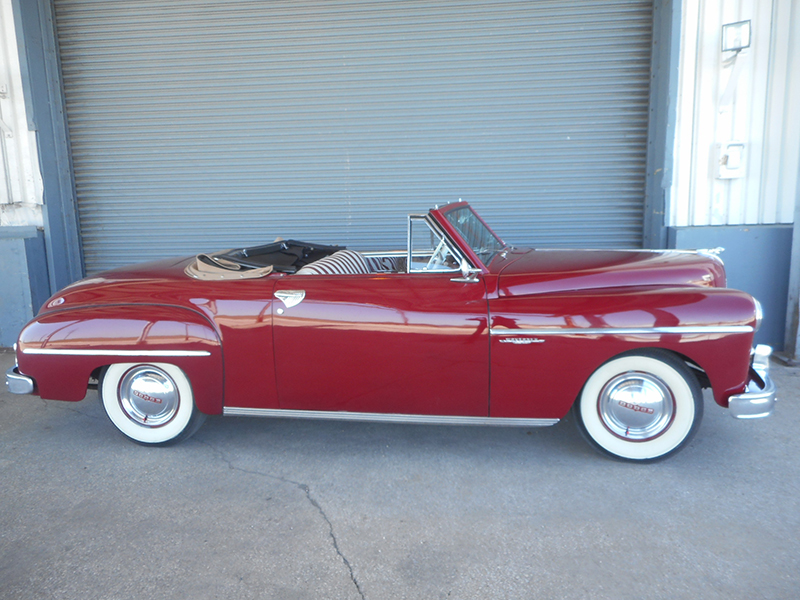
The Wayfarer was Dodge’s entry-level two-door from 1949 to 1952, and what is notable about it included a 2-seat roadster model. There hadn’t been a true roadster out of Detroit since 1931. While the Wayfarer model line was popular enough to sell 200,000 units sold across four years, only 9,325 of them were Roadsters. While jaunty in design, the Roadster was not powerful. The 230 cu in inline-six was rated at 103 horsepower and 190 lb-ft of torque, resulting in a 0 to 60 of more than 20 seconds. Then again, “Wayfarer” is defined by the Oxford English Dictionary as “a person who travels on foot”, so it was at least faster than its name implied.
48. 1987 Shelby Charger GLH-S
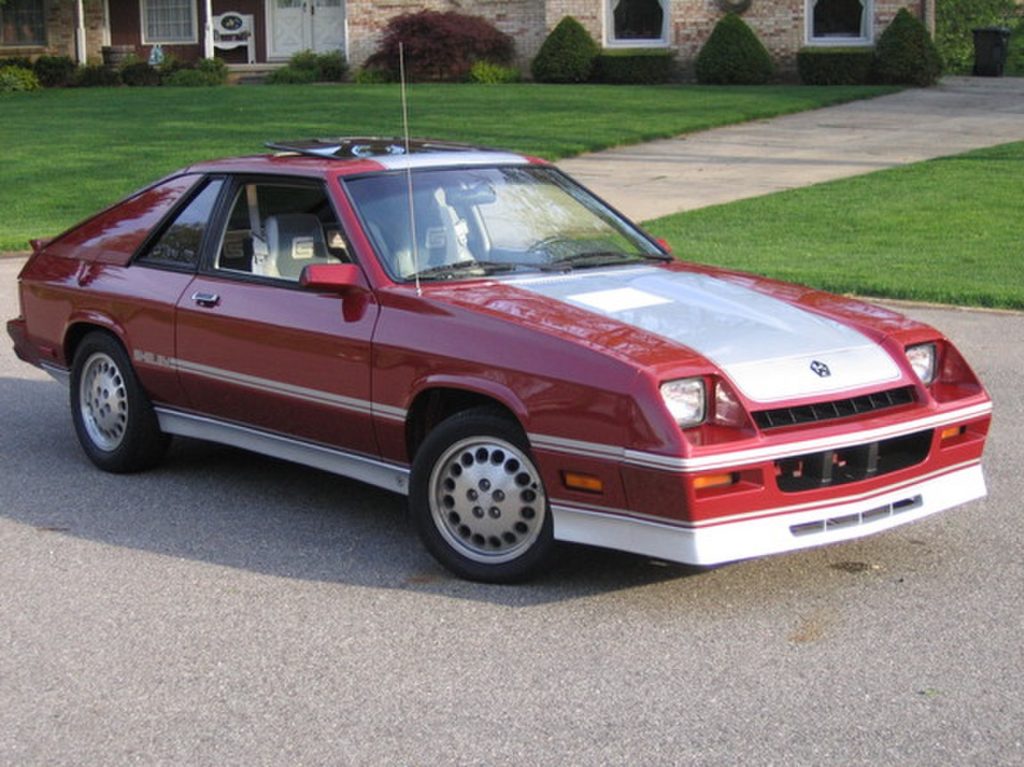
The 1978 Dodge Omni 4-door hatchback and identical Plymouth Horizon were the first front-drive economy cars assembled in the United States. Four years later, both Dodge and Plymouth came out with 2-door fastback coupe versions of the car, which Dodge applied the iconic Charger to. Purists gave it the side-eye, but Carrol Shelby saw potential and started producing a higher-performance version of the car that at least had over 100 horsepower.
This culminated In 1987 when Shelby bought the last 1000 Chargers and fitted them with turbocharged versions of the 2.2-liter inline-4. The GLH (Goes Like Hell) -T produced 146 horsepower, but the relatively big dog was the GLH-S which produced 175 horsepower and
47. 1985 Shelby Omni GLH-S
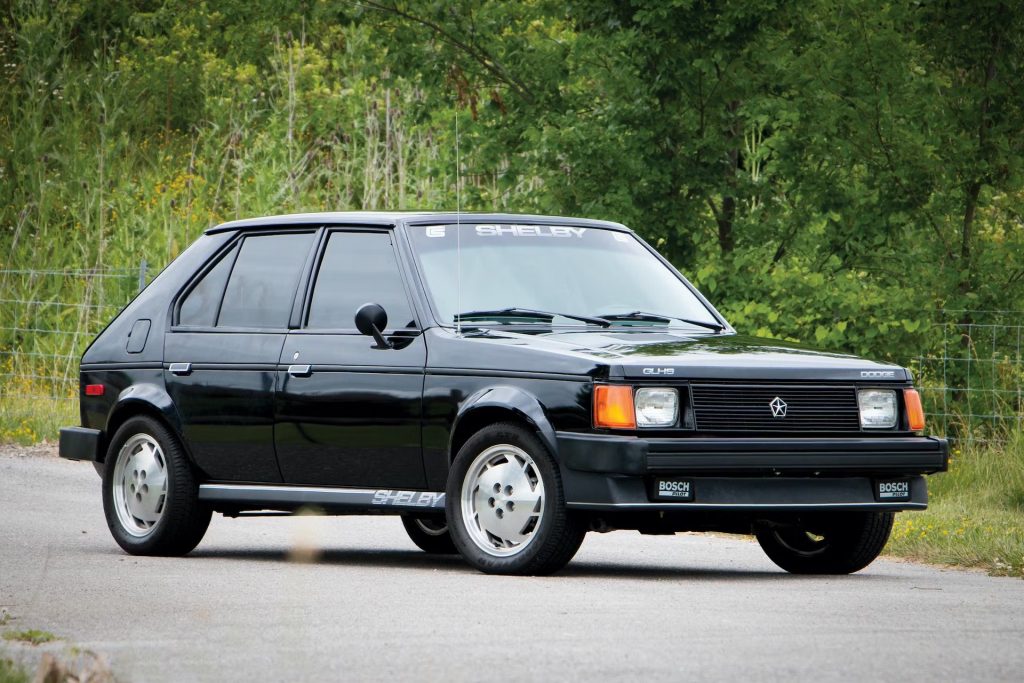
While the 4-door hatchback Omni gave Americans a domestic choice among the similarly configured Japanese cars flooding the country, its generic slab-sided styling is
175 lb-ft of torque. Keep in mind that the Camaro 5.0-liter V8 was only producing 178 horsepower at the time.
the last thing you would expect to become a muscle car. Similar to what he did with the #48. Shelby Charger GLH-S, Carrol Shelby bought 500 Omni’s and gave them the same 175 hp 2.2-liter engine, albeit in limited numbers. Americans had their first hot hatch, which could beat several V-8-powered Cameros, Firebirds, and Mustangs in the quarter mile.
46. 1956 D-500
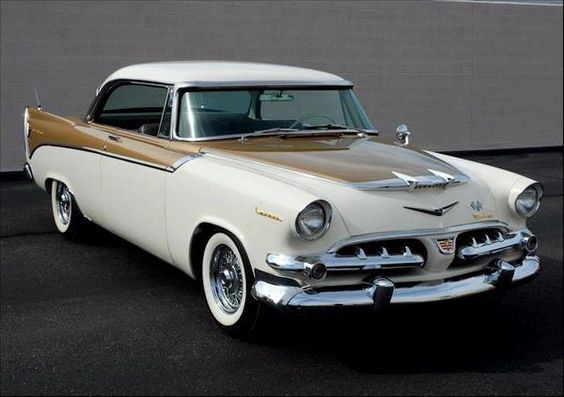
A muscle car before the term was coined, the D-500 was a high-performance version of the Coronet sedan and Royal Lancer hardtop & convertible designed for NASCAR homologation, much like the high-winged Daytona 14 years later. Under the hood was the “Red Ram” 315-cu in HEMI V8 with dual Carter four-barrel carburetors, which produced 285 horsepower in its most aggressive form. It was also outfitted with a heavy-duty suspension and upgraded brakes from the Chrysler New Yorker and Imperial models. The D-500 only existed for one year, during which it won 11 stock car races and set several Bonneville Salt Flats speed records.
45. 1978 Aspen Super Coupe
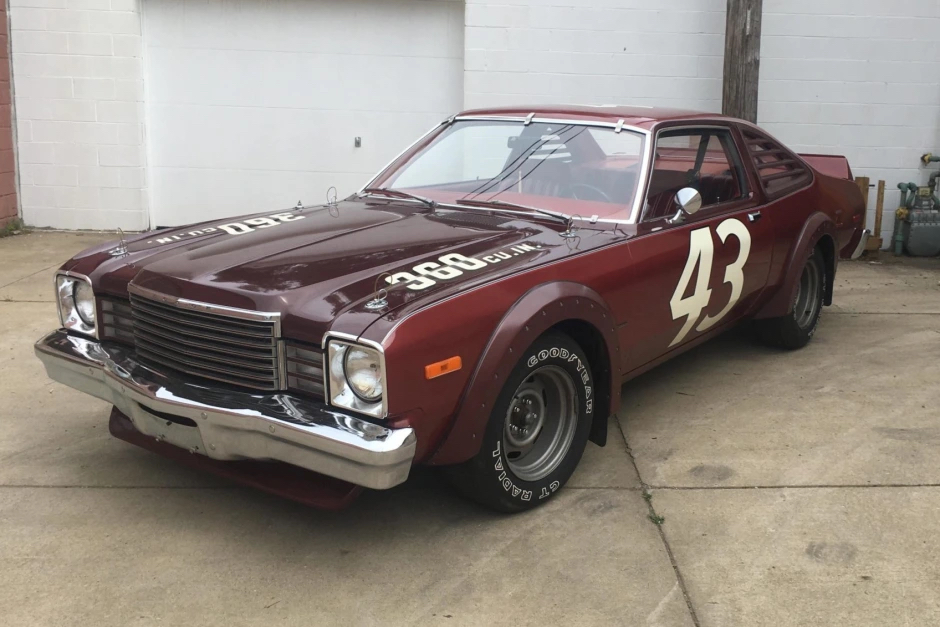
In 1976, the Aspen replaced the long-running Dart compact. Most were powered by Chrysler’s venerable 225 cu in “slant-six”. But like the Darts before, it could be fitted with a 318 or 360 cu in V8. Richard Petty had driven Plymouths for much of his career, but in the 70s, made the side-step to Dodge. The Super Coupe was developed to celebrate the NASCAR legend. Though too small to actually compete in NASCAR, the Super Coupe was designed to look as much like a NASCAR racer as possible complete with the Petty’s “43” on the doors, steel wheels, louvered rear quarter windows, and even metal tie-downs for the windshield. It had the Aspen’s most powerful 175-hp 360 cu in V-8 but no real high-performance upgrades. A total of 145 Super Coupes were built.
44. 1970-98 Ram Van
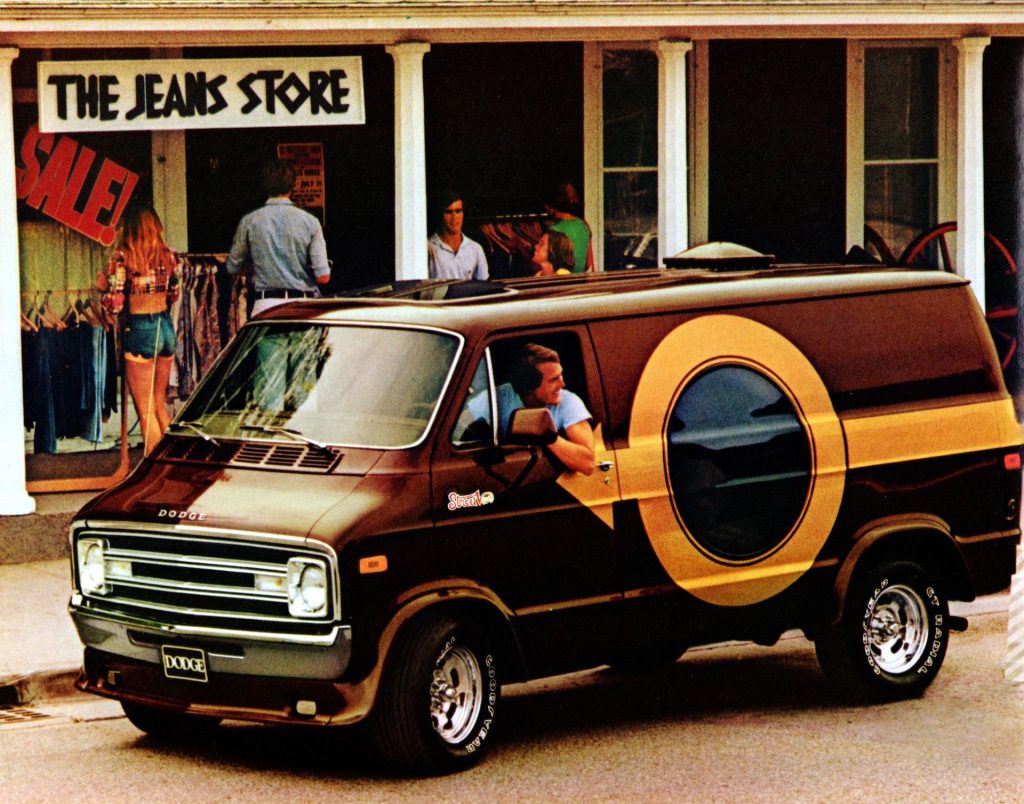
Six years after it was introduced, the 1970 Dodge full-size van was given a new look and a new name. It was the first Dodge with the Ram name, which eventually became its own truck division. The updated design came just in time for the 70s custom van craze. While Ford, Chevrolet, and GMC all enjoyed fame in the era, the Dodge Ram Van was the most iconic of the fad, which Doige took advantage of by offering factory custom options called the Street Van Package.
43. 1990 – 2011 Dakota
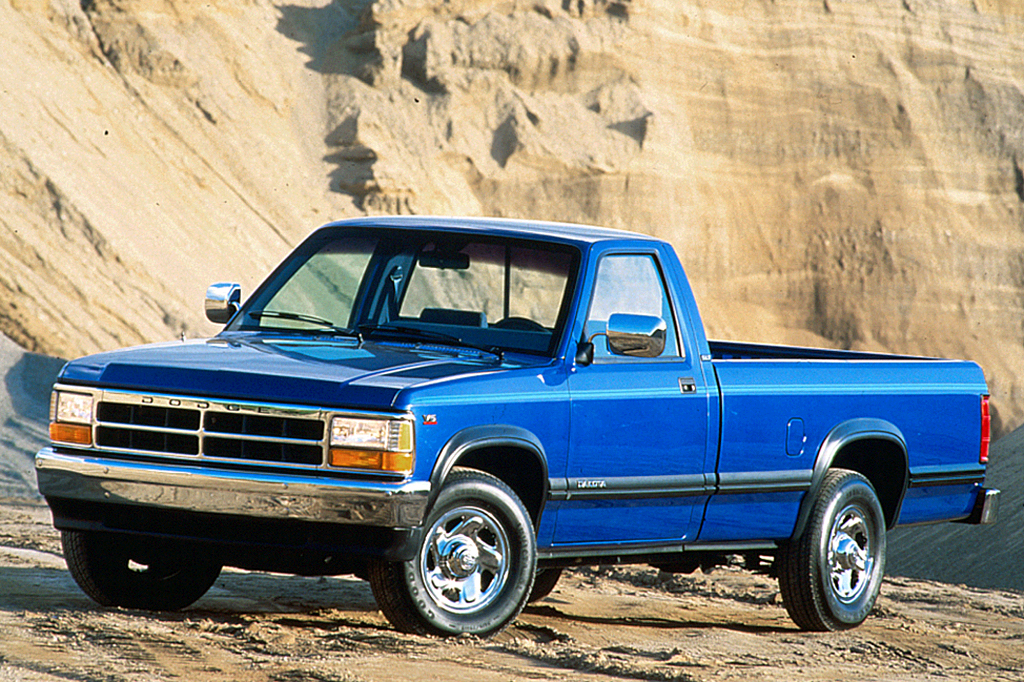
Japanese compact pickups trickled into the market in the 60s but started hitting their stride in the 70s, many of which had American badges on them. In the early 80s, Chevrolet’s S-10 and Ford’s Ranger replaced their captive Japanese models with American-made compact trucks. The Dakota came half a decade later but with a twist. It was mid-sized, a distinct size between the compacts and full-size trucks, and it had a V8 option.
Higher performance “Sport Trucks” followed, as did a Club-cab version that could seat six people provided they were generous with their social space. As people became more comfortable with fuel prices, the Dakota found itself without a compelling reason to exist and was discontinued in 2011.
42. 1965-77 Monaco
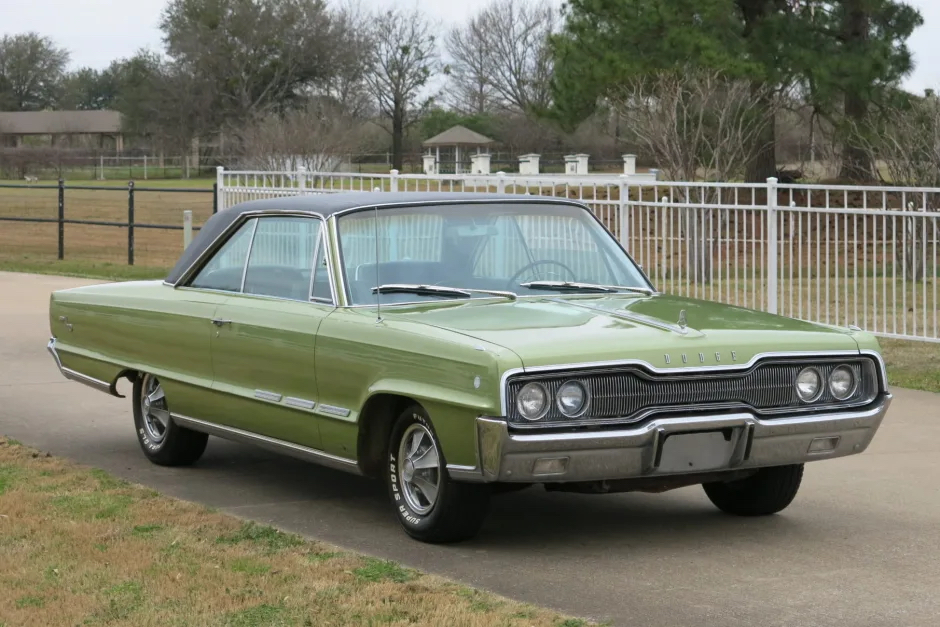
The Dodge Monaco was a well-pointed full-size two-door hardtop that was originally intended to compete with the Pontiac Grand Prix personal luxury coupe. Instead, it became Dodge’s most lavishly appointed model where it completed with 2-door coupe versions of the Chevrolet Caprice, Ford LTD, and others, all nipping at the heels of more premium brands such as Oldsmobile, Buick, Mercury, and Chrysler.
By 1969 the model line grew in size and expanded to a four-door sedan & hardtop and station wagon body styles, which further solidified its place as a better-appointed Polara. By 1974, Monaco became the name for all full-size Dodges, which filled police fleets across the country. It is probably best remembered in the 1980 Blues Brothers movie where it was the ex-police cruiser “Bluesmobile” that was chased by countless other Monaco police cars. A total of 103 cars were wrecked in the movie, most of which were Monocots.
41. 1971 Dart Demon
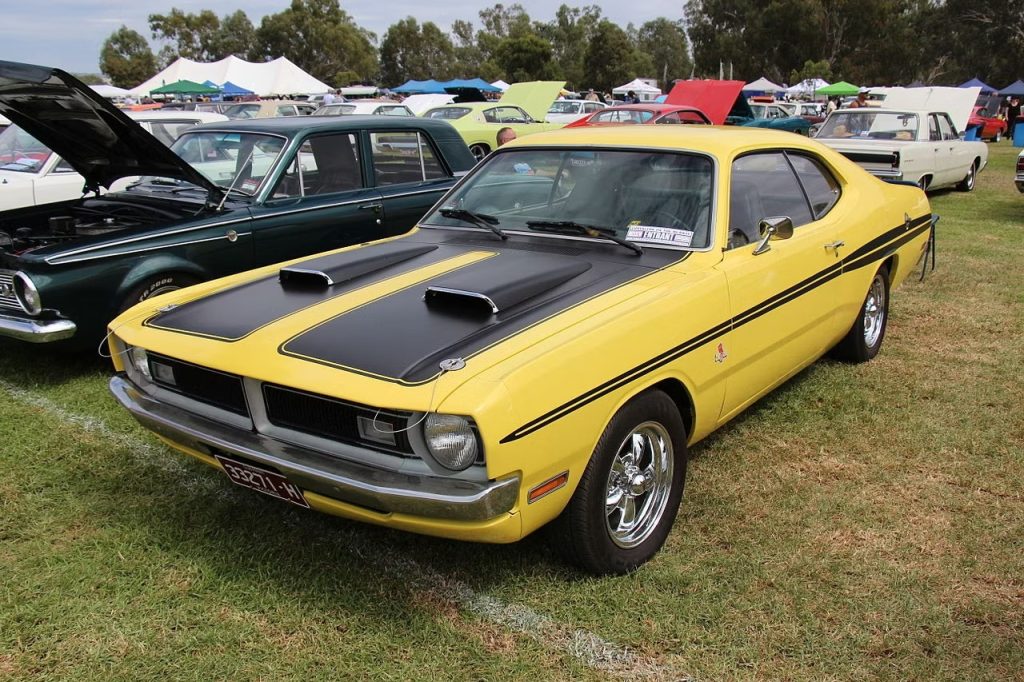
Plymouth introduced the 1970 Duster, as a 2-door Valiant hard-top with a 4-inch shorter wheelbase and sportier styling from the windshield rearward. The model was a runaway sales success. In 1971 Dodge introduced their own version of the Duster and gave it the Demon name. The Demon became Dodge’s compact performance car with dual hood scoops, blacked-out trim, and an available 275 hp 340 cu. in. V8. The Demon name lasted just two years and lay dormant until the 1025 hp Demon 170 “Last Call” Challenger.
Stay tuned when Benna CDJR presents the 31-40 ranked best Dodge models.
Best Long-Term Maintenance Plan for the Ram 1500
Everyone understands that regular maintenance is the best course of action to prolong the life of a vehicle. At Benna CDJR, we strive to make all of your vehicle maintenance as trouble-free as possible. It is worth noting that vehicle maintenance schedules are established when the vehicle is new, before few, if any, versions of the model have reached high mileage in real-world use. The enthusiast site Motorbicuit has taken a look at the Dodge Ram 1500 maintenance schedule and then talked to current high mileage Ram 1500 owners and worked out their own recommended maintenance schedule.
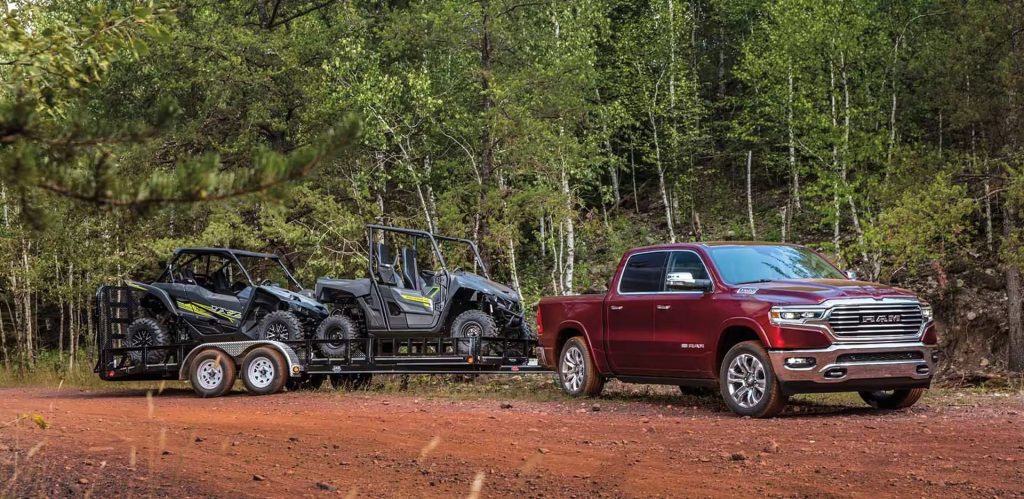
The Ram 1500 comes with a maintenance schedule for up to 144,000 miles. But, in the words of Motorbiscuit, “Some owners claim Ram 1500s are so reliable that they don’t consider their Ram trucks high mileage until they reach the 200k mark.” The Ram 1500 design only dates back to 2019, so examples of models that have surpassed the 144K mark aren’t common.
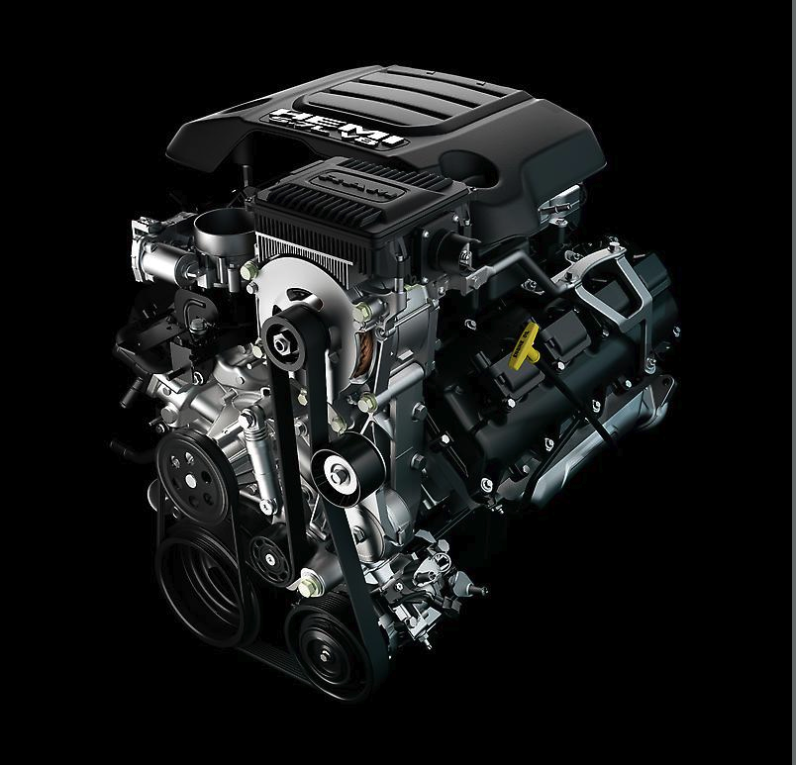
Josh Wheeler is a diesel mechanic who regularly travels across the country and puts about 50K miles per year on his 2019 Ram 1500 Limited, the odometer of which now shows 190K miles. He let Ram’s built-in systems tell him when to change the oil, which had him service it about every 8K to 10K miles. After his 160K oil change, Josh sent samples of the old oil to two separate labs for analysis. The unanimous results were that the 5.7-liter Hemi V8 “Had a perfect score.” His worst issue was a cracked exhaust manifold which he addressed promptly.
The Maintenance Schedule
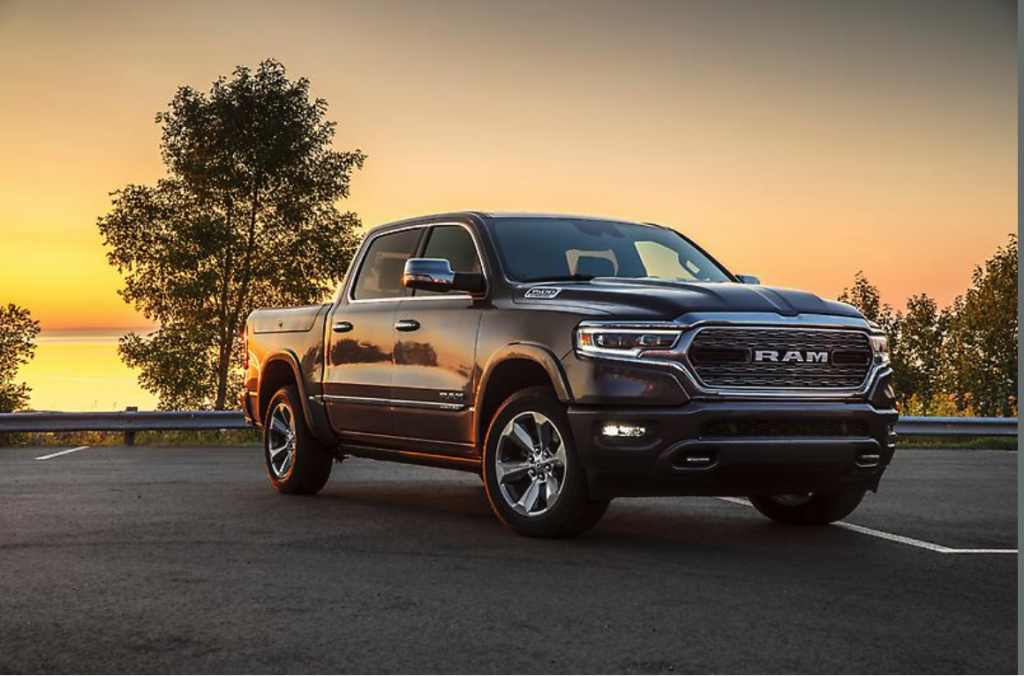
Motorbiscuit published the following maintenance schedule based on the official Ram recommendations and some additional input from the CarEdge.com website. Here is their recommendation:
Mileage Service
| 8k miles | Oil change & tire rotation |
| 16k miles | Oil change & tire rotation |
| 20k miles | Inspect: brake pads, tie rods, and all front suspension components |
| 24k miles | Oil change & tire rotation |
| 30k miles | Inspect: Brakes, front suspension components, CV joints, transfer case fluid, and the condition of the transfer case and axle |
| 32k miles | Oil change, tire rotation Replace: Air filter and spark plugs |
| 40k miles | Oil change & tire rotation |
| 48k miles | Oil change, tire rotation Replace: Spark plugs |
| 56k miles | Oil change & tire rotation |
| 60k miles | Inspect: Brakes, suspension components, and all filters Check and/or replace: transmission fluid, engine coolant, transfer case fluid, and brake fluid |
| 64k miles | Oil change, tire rotation Replace: Air filter, spark plugs, and spark plug wires |
| 72k miles | Oil change & tire rotation |
| 80k miles | Oil change, tire rotation, cooling system flush |
| 88k miles | Oil change & tire rotation |
| 96k miles | Oil change & tire rotation Replace: Air filter, spark plugs, and spark plug wires |
| 100k miles | Inspect: Brakes, suspension components, CV joints, and all filters Check and/or replace: transmission fluid, engine coolant, transfer case fluid, and brake fluid |
| 104k miles | Oil change, tire rotation, cooling system flush |
| 112k miles | Oil change & tire rotation |
| 120k miles | Oil change, tire rotation, serpentine/drive belt replacement, transmission fluid service, transfer case fluid service Inspect Brakes and suspension components. Check and/or replace: Engine coolant and brake fluid |
| 128k miles | Oil change & tire rotation Replace: Air filter and spark plug/wires |
| 136k miles | Oil change & tire rotation |
| 144k miles | Oil change & tire rotation Replace Spark plugs and cabin air filter |
Following this maintenance schedule not only protects your car and you should you need to make a warranty claim, we will also have your entire service history all in one place if you have the maintenance performed by our Benna CDJR service professionals. That could increase your vehicle’s resale value. We offer you a challenge. Let’s work together to see if we can set a record for longest lasting Ram 1500.
Is the Dodge Viper Due for a Comeback?
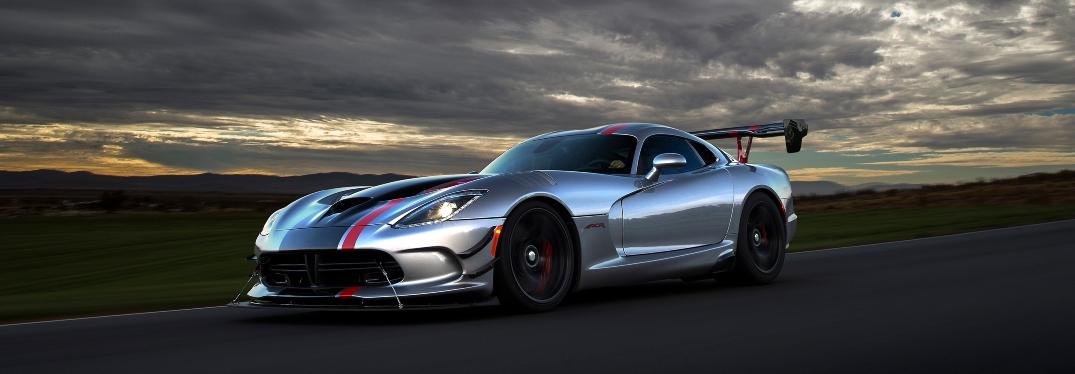
Dodge is no stranger to producing high-performance supercars and muscle cars, and few are as easily recognizable and legendary as the Viper. It’s truly a one of a kind vehicle, from the handcrafted details to the unprecedented speed. Although it’s no longer in production, that doesn’t stop fans from drooling over Viper models of the past and wishing for new models.
History of the Viper
Since its introduction in 1992, over 30,000 Viper models have made their way to the worldwide market. This American-made supercar made waves at first introduction with its 10-cylinder engine capable of 400 horsepower. It’s only gone up from there, despite pauses in production, with the latest 2017 release marking the end of the Viper – for now, anyway. As one of the only street-legal track cars, the Viper is sorely missed, even though Dodge produces some equally-powerful cars like the SRT Hellcat.
What really makes the Viper stand out is its fine craftsmanship and attention to detail. Each viper is a custom-built masterpiece, touched by human hands and made with only the best materials. The Viper finally said goodbye in 2017 with six special edition releases and options for true customization. Buyers got the chance to make their Viper one-of-a-kind, with 50 million ways to make the car their own. There were an unbelievable 16,000 exterior colors, 24,000 custom stripe options, and even more ways to fine-tune the Viper from the inside out.
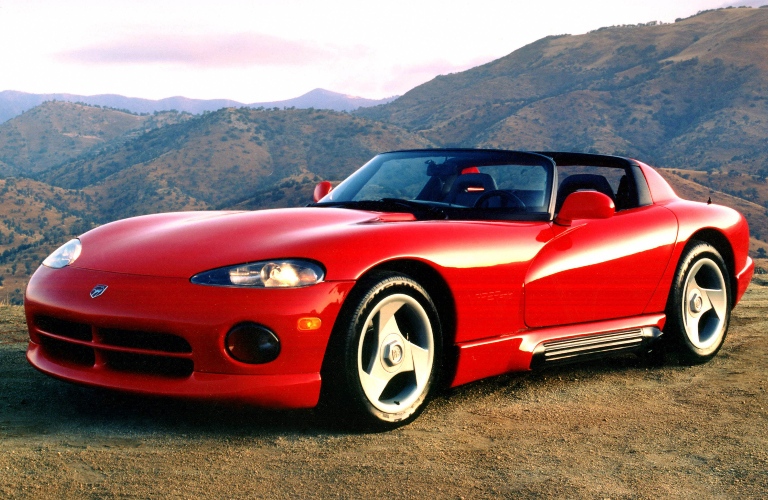
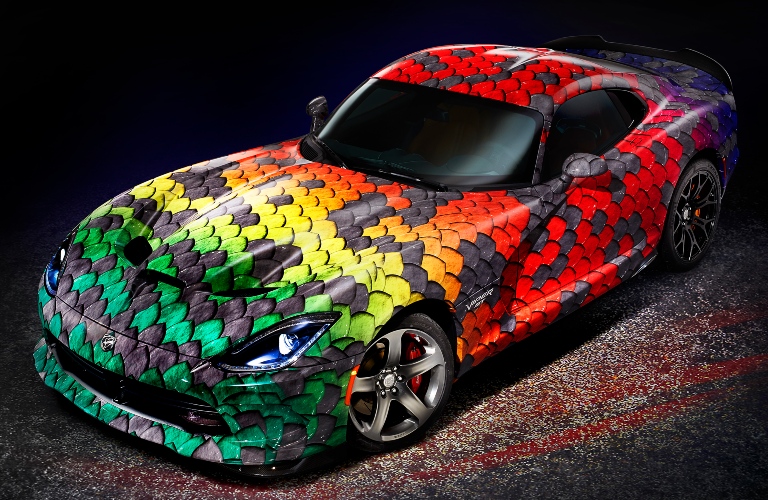
Now, with a limited number of pre-owned Viper models to choose from, enthusiasts are taking Viper to the digital world. Fans are creating their own prototypes for what a new Viper could look like, taking inspiration from cars of the past and present. Even though a re-release of the Viper is only a dream, that doesn’t stop artists and car enthusiasts from hoping that it will someday make a comeback. We can only hope to see a new release of the iconic supercar – this time, maybe in an electrified model.
Find Your Dodge at Benna CDJR
Although there’s no word of a new Viper, you can find all the latest Dodge releases, like the 2023 Challenger, here at Benna CDJR. View our available inventory online, contact us with the car you’d like, or place a factory order directly from our website.

Camp Jeep is making its way to the 2023 New York International Auto Show, allowing attendees to get a taste of what a Jeep is truly capable of. At the event, drivers can tackle a specially-built obstacle course that demonstrates the off-road performance of the newest Jeep models. It’s a hands-on experience that shows off everything that Jeep has to offer.
Attendees of the auto show will get the chance to explore the features and capability of models like the Gladiator, Wrangler Rubicon, and Wrangler 4xe as they take on a thrilling obstacle course that’s made to show off everything a Jeep can do. One of the most exciting parts of Camp Jeep is “Jeep Mountain”, an 18-foot obstacle that towers over the rest of the show, bringing heart-pounding excitement as the driver ascends.
Some of the featured Jeep models that can be driven at Camp Jeep include the exciting new Wrangler 4xe, a highly efficient and powerful plug-in hybrid. Drivers can climb the terrain in all-electric mode with 375 horsepower and 470 pound-feet of torque, easily conquering any obstacle. There’s also the Gladiator, the first-ever Trail Rated pickup on the market. It includes 11.1 inches of ground clearance, steel skid plates, and Off Road + mode that make a tough climb feel more like a walk in the park.


With over 123 years of history, the New York International Auto Show continues to excite with one of the largest showings of what’s to come for the auto industry. It started in 1900 in Madison Square Garden, and today, the show opens to the public to explore the latest technology, engineering, and development. You can attend this year’s show from April 7-16 in New York City, with general admission and private tour packages available to all.
Explore the Jeep Lineup at Benna CDJR
Can’t attend the New York International Auto Show? No problem! You can visit us at Benna CDJR to discover the newest Jeep models like the Wrangler and Gladiator. We can schedule a test drive and demonstrate all the features and capability of each 2023 Jeep that you’re interested in. Contact us today to learn more!
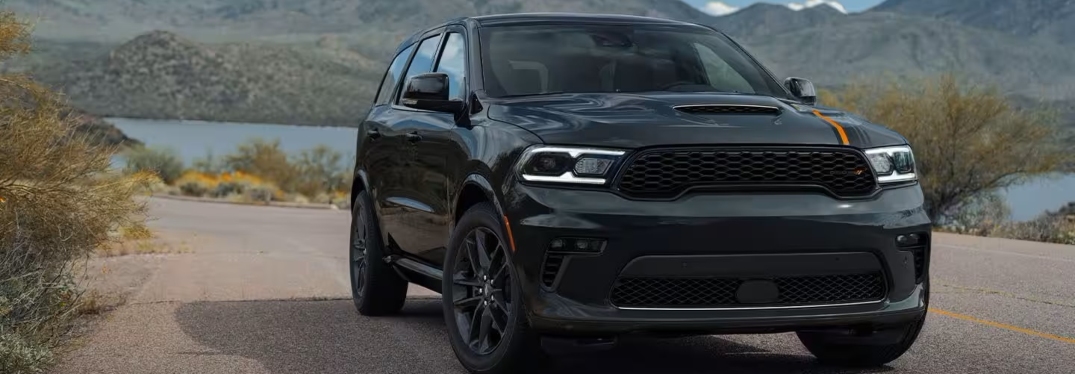
Finding the right family vehicle can be a challenge. You want safety, convenience, and comfort rolled into one, but not every vehicle can check all those boxes. Luckily, the new 2023 Dodge Durango is coming soon, with all of that and more.
2023 Dodge Durango Interior and Features
Let’s face it: whether you’re driving alone or with the kids, you can never have enough room. The new Durango shines in that department, with three rows of seating and up to 85.1 cubic feet of cargo space to haul just about anyone or anything. Best of all, the seats are easily configurable so you can have both passenger room and storage space depending on your needs with over 50 different options. Plus, it’s done easily with the touch of a button. When it comes to convenience, the whole crew will love the available 10.1-inch Touchscreen Display with Apple CarPlay and Android Auto Support.
Performance, Capability, and Towing
Of course, your busy life needs an SUV to meet every demand. The 2023 Dodge Durango comes with four engine options, from the 3.6L Pentastar V6 all the way to the Supercharged 6.2L HEMI V8. For a vehicle of its size, handling is surprisingly smooth due to its weight balance and available all-wheel drive. Then, when it’s time to go on your weekend adventure or summer road trip, the Durango can provide up to 8,7000lbs of towing capacity without compromising the ease of the drive. Trailer sway control comes standard, and there are even several available packages like Tow N Go to maximize your capability.
Trims, Pricing, and Packages
Choose from seven trims: SXT, GT, R/T, R/T HEMI Orange, Citadel, SRT 392, or SRT Hellcat. Each provides different standard and available features, with options for 4X2 or AWD available up to the Citadel trim – then, it’s all AWD. Pricing starts at $38,890, increasing with each trim level. Of course, Dodge also offers several options for customization with several packages. Stand out with the SRT Black or Blacktop packages, or increase your power to your desire.
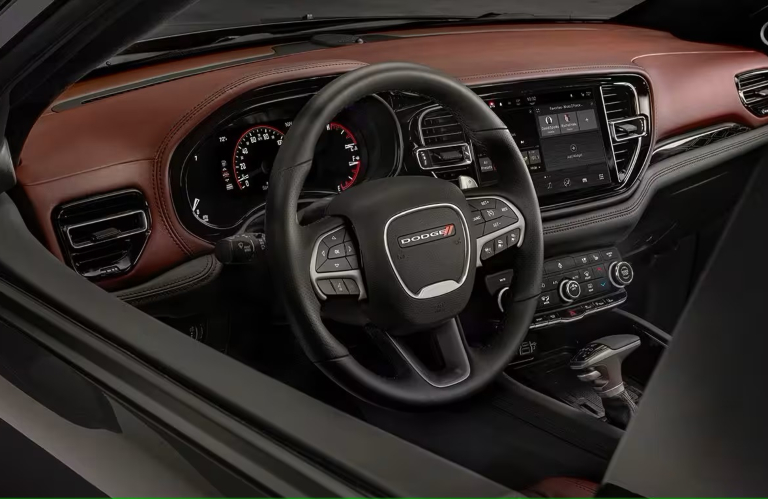

2023 Dodge Durango Coming Soon to Benna CDJR
Are you interested in the 2023 Dodge Durango? New models are arriving soon at Benna CDJR, so don’t hesitate to contact us today. We can help you choose your Durango and have it ready for you as soon as it arrives.
March is Women’s History Month

March is here, and that means it’s time to celebrate women’s contributions throughout history with Women’s History Month. All month long, we’re celebrating women both at our dealership and around they world as we acknowledge the differences they’re made to the car industry and our personal lives.
The History of Women’s History
Women’s History Month actually began as a single week in 1982. For the next five years, different presidents continued to pass the resolution until the entire month of March was dedicated to women. Resolutions were proposed and approved every year, setting aside one week per year dedicated just to women in America. A few years later, there was a proposal to expand to an entire month, and Women’s History Month was born. Since then, every month has set aside March as a way to celebrate women’s contributions to the United States in a variety of fields and industries. It’s only grown since then, as we learn more about what women have done behind the scenes to make such a difference.
Contributions to the Automotive World and Beyond
Today, women make up a big part of the car world. There’s the Rebelle Rally, a women-only competitive event that tests the skills of drivers and navigators as they make their way through a grueling desert landscape. Then there’s the National Hot Rod Association Drag Race Series, an inclusive competition that has welcomed women with open arms for decades. Many women have competed and won, proving that women deserve just as much space in the automotive world as men. Even the Stellantis Group has Women of Stellantis, a resource group created in the last few years to promote women in leadership and throughout Dodge, Chrysler, Jeep, and RAM. With over 3,000 current members, the group’s goal is to have 35% of women in leadership by 2030 across their global network.
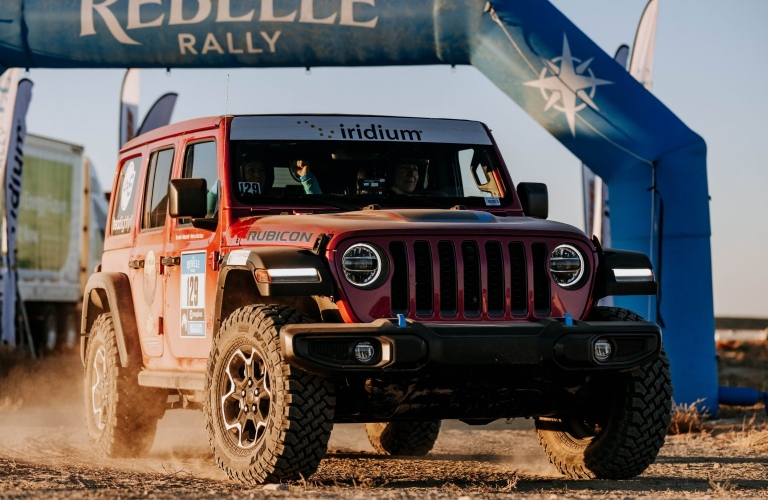

Here at Benna CDJR, we celebrate Women’s History Month every day through our amazing staff. Women aren’t just our peers, but they’re also our leaders as we celebrate a diverse environment welcome to everyone. From our office to our sales staff and service department, women are a welcome and valued part of our team. Visit us today to celebrate with us!
Connect with us


Recent Blog Entries
- Jeep Wrangler vs. Jeep Gladiator: Which Fits Your Lifestyle?
- The HEMI® Is Back: Why Ram Brought Back the V8 in the 2026 Ram 1500
- Ram 1500 Reigns as MotorTrend 2025 Truck of the Year
- Chrysler Unveils Pacifica FAV Edition
- Wagoneer S and 1500 Ramcharger Among Newsweek’s Most Anticipated Vehicles for 2025