





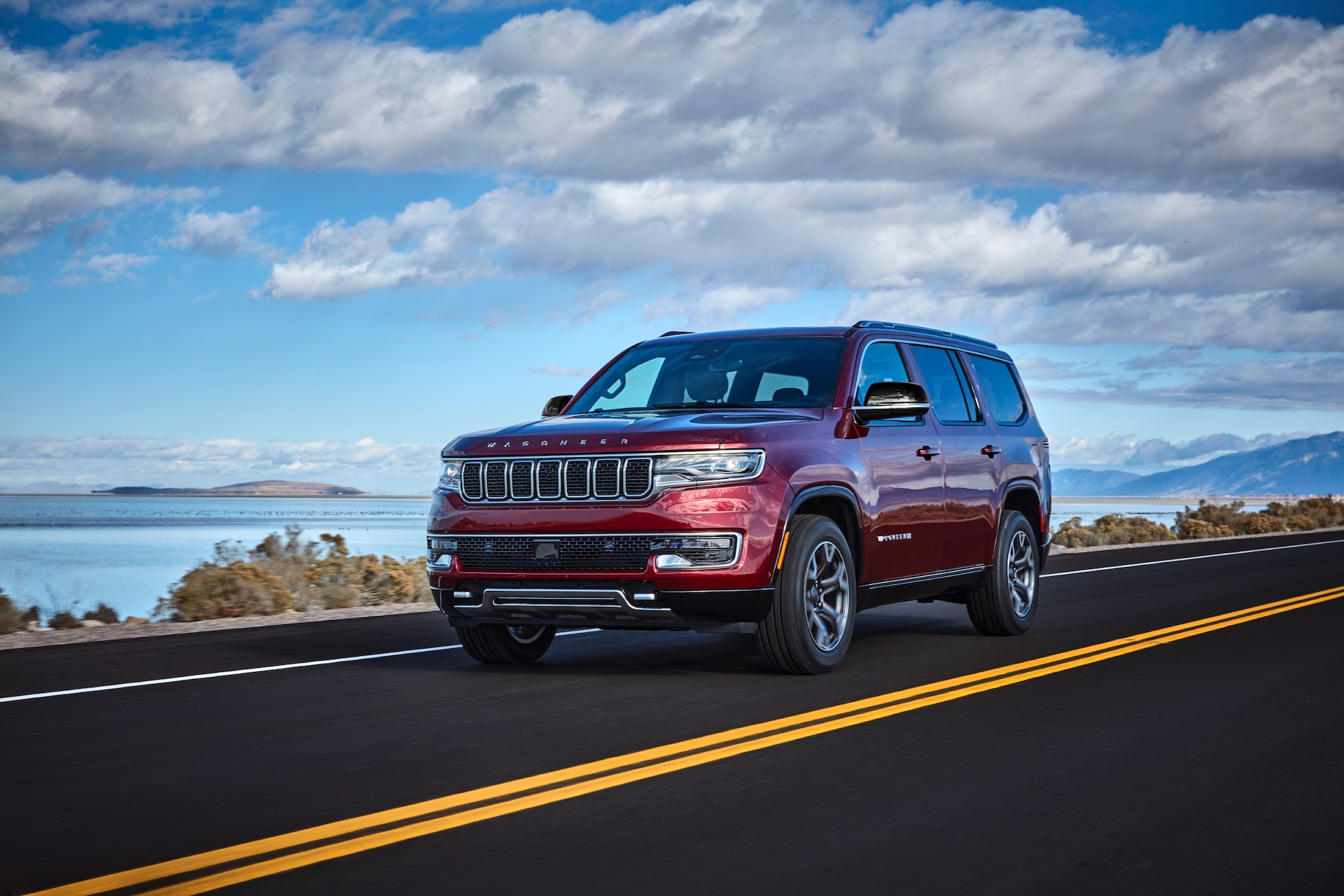
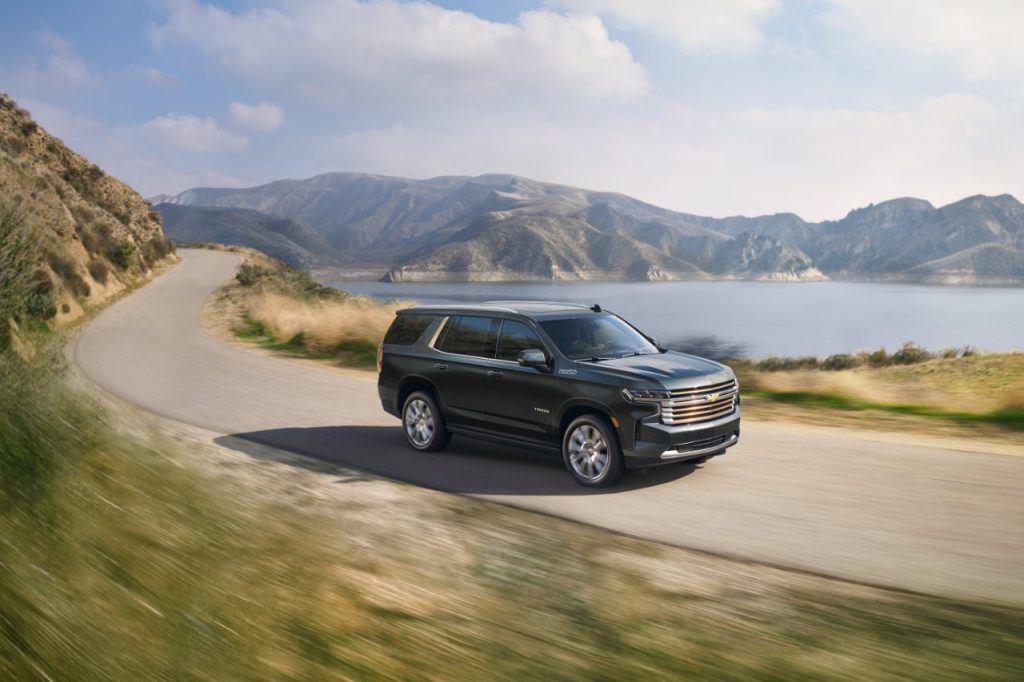
The Jeep Wagoneer dates back to 1962, long before the term SUV existed, and it continued largely unchanged for 30 years. The market for such a vehicle was very small back then, and the Wagoneer found itself a niche market of Field & Stream subscribers and people who visited their country homes on the weekend. After it was gone, Jeep resurrected the Wagoneer name briefly a couple of times, but it wasn’t until 2022 that Jeep brought the Wagoneer back to fill its original category as a full-size three-row SUV. In terms of sales and name recognition, its biggest competitor is the Chevrolet Tahoe, which first appeared just a few years after the original Wagoneer left. In this post from Benna Chrysler Dodge Jeep Ram, we compare the 2024 Wagoneer to the Tahoe.
Wagoneer vs Grand Wagoneer
Jeep created a little confusion when it introduced both the Wagoneer and Grand Wagoneer. The Grand Wagoneer is on a whole different level in terms of luxury and is meant to compete against luxury-brand models, but its size is identical. However, there are longer versions of both models called the Wagoneer L and Grand Wagoneer L, which are Suburban-sized. The Tahoe is simply a shorter version of the Suburban.
Big News Smaller Engine Hood
The biggest news for the 2024 Wagoneer is that its 5.7-liter V-8 has been replaced by the new Hurricane 3.0-liter twin-turbo inline-6, the sole engine across the model line. The Hurricane significantly out-powers the V-8 with 420 horsepower and 486 lb-ft of torque. It also outpowers Tahoe’s standard 355 horsepower and 383 lb-ft 5.3-liter V-8. Adding insult to industry, it also outpowers the Tahoe’s optional 6.2-liter V-8, which produces an identical 420 horsepower but falls short in torque with just 460 lb-ft. Conversely, the Tahoe’s available 3.0-liter turbodiesel bests the Hurricane with 495 lb-ft of torque but has significantly less horsepower.
When comparing standard engines, the power differences are apparent in acceleration, with the Wagoneer showing 0-60 mph in 6.3 seconds compared to 7.5 for the Tahoe. It also makes itself known in towing capacity, which is up to 10,000 pounds for the Wagoneer compared to 7,800 lb for the standard-engined Tahoe, rising to 8,400 lb. with the optional diesel engine.
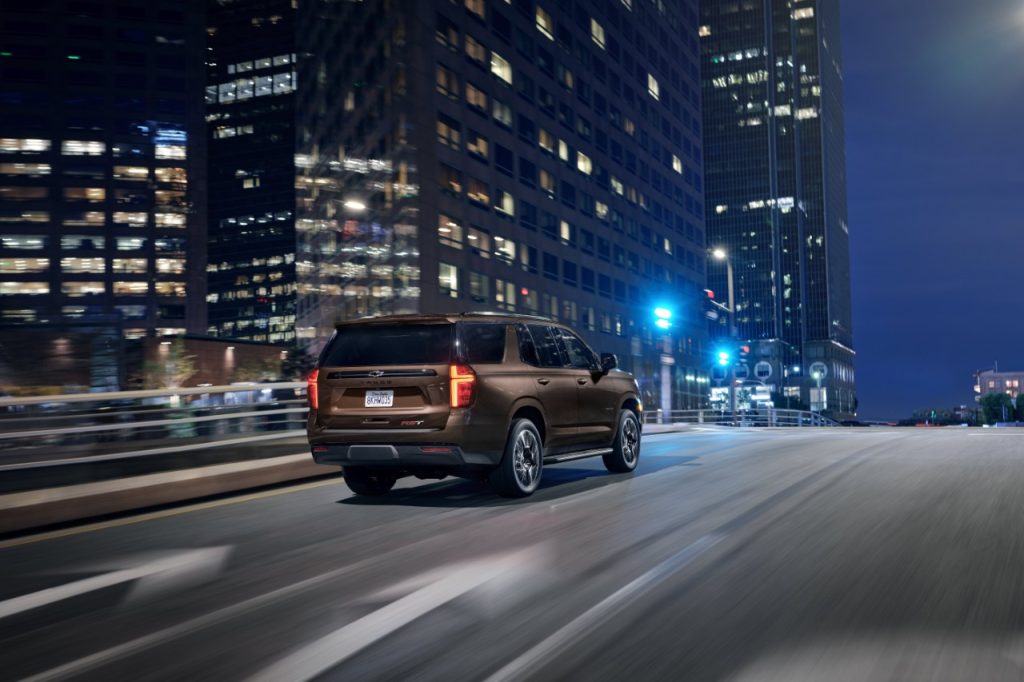
The Wagoneer is also a little less thirsty with an EPA estimated city/highway/combined mpg rating of 16/19/23 for a 4WD mode versus 15/20/17 for the 5.3-liter V-8 4WD Tahoe. Combined with a larger fuel tank, this results in an estimated range of 610 miles in the Jeep versus 480 for the Chevy. However, the Tahoe’s optional turbo diesel takes the efficiency crown with 20/26/22. Of course, diesel is also 11% more expensive than regular gasoline on average in Wisconsin.
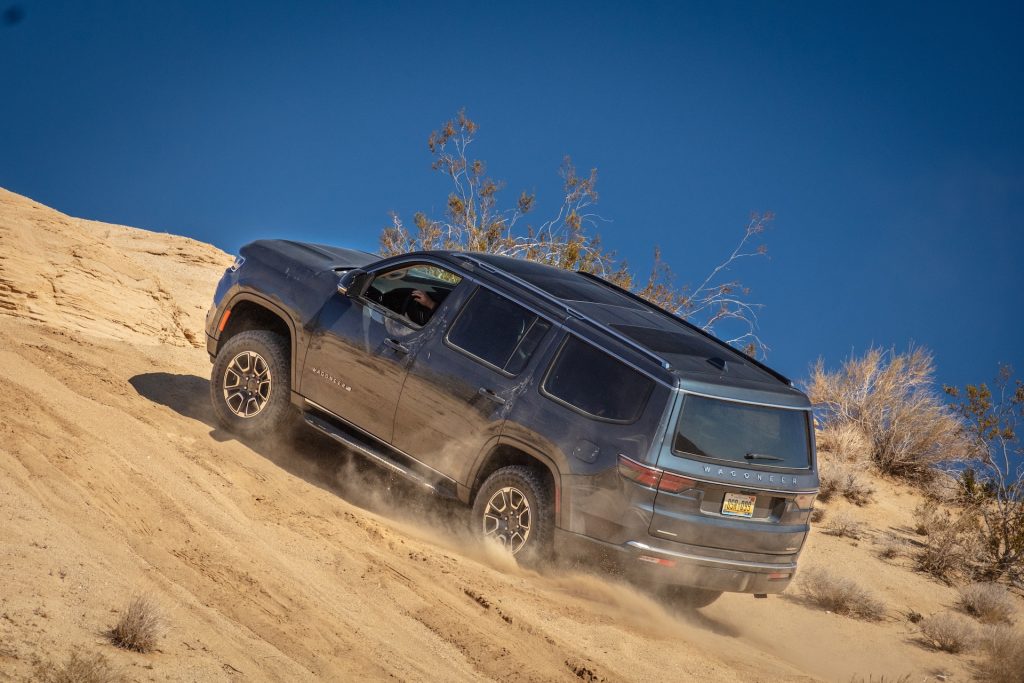
You wouldn’t select either of these models for a run on the Rubicon Trail, but for the occasional excursion off-pavement and our abundant snow, 4WD is a $3,000 option for both models. If you need a two-speed transfer case, it is standard with 4WD on the Tahoe but comes to the Wagoneer via a Heavy-Duty Trailer-Tow Package that contributes to its large towing capacity mentioned above.
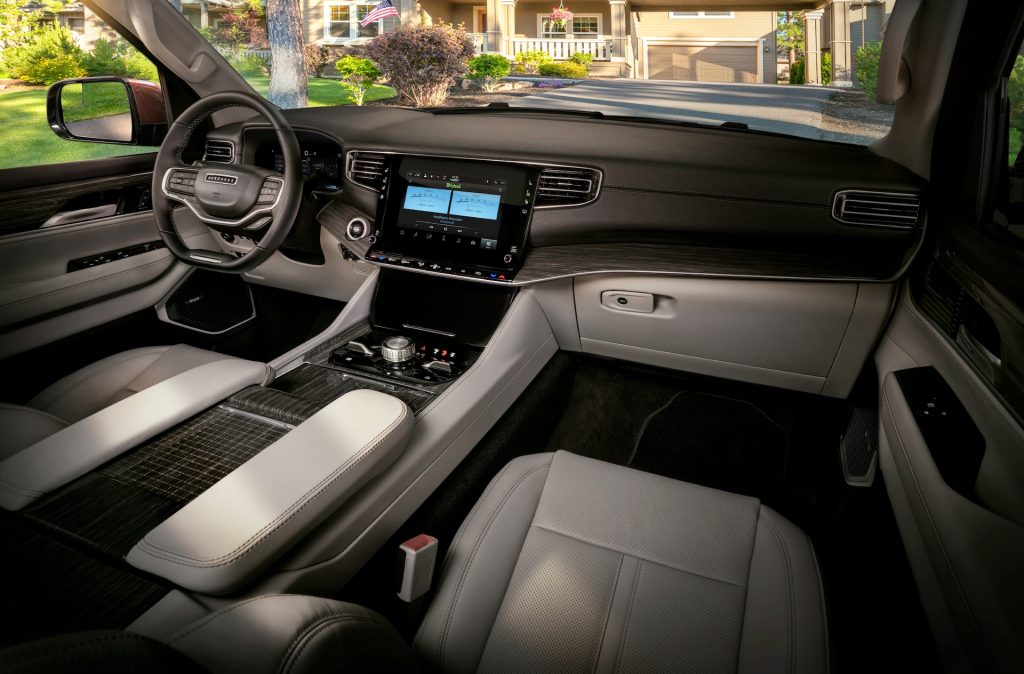
The Great Indoors
Both models specialize in vast interiors, with a seating capacity of eight, or seven if one opts for 2nd-row captain’s chairs. Adults will be perfectly fine in the 3rd row, though the Wagoneer’s 3rd-row legroom of 36.6 inches is 1.7 inches over the 3rd row in the Tahoe. With all the seat backs up, the Waggoner’s 27 cubic feet of cargo space is one cubed foot over the Tahoe’s. That turns around when you start folding seats, and when turned into 2-seaters, the Tahoe has 123 cubic feet compared to 117 for the Wagoneer.
The Wagoneer shares its dashboard layout with the Grand Wagoneer, while the Tahoe shares its with the Silverado pickup truck. The result is a decidedly more luxurious dashboard in the Jeep.
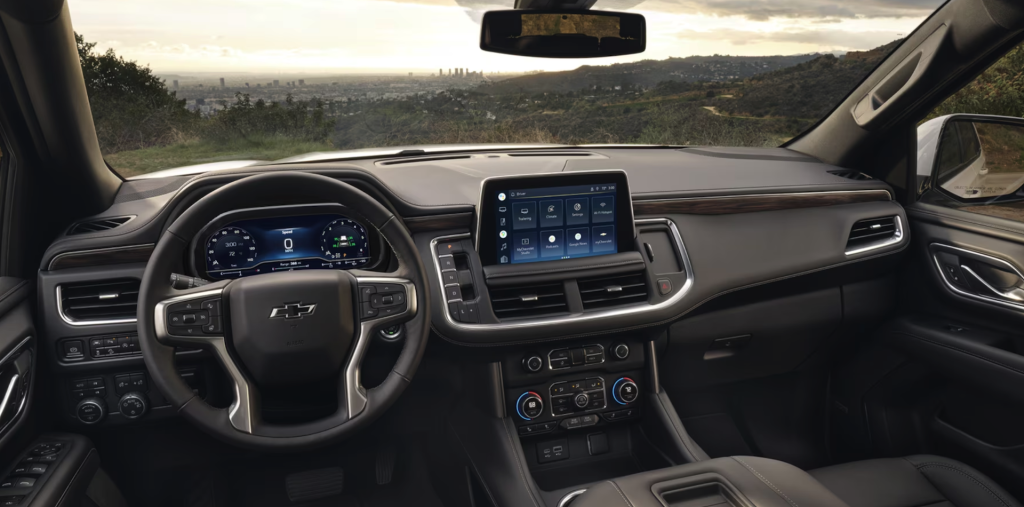
The Wagoneer has a higher starting MSRP, which is close to the Tahoe LT, and one upgrade from the base LS. As such, both moth models are similarly equipped. Both have 10-inch touchscreens, onboard navigation systems, wireless smartphone compatibility, leather seating, and power adjustments for the driver and front passenger. There are trade-offs. For example, ventilated front seats are standard on the Wagoneer but need another upgrade for the Tahoe. While the base Wagoneer has a 10-speaker audio system, the Tahoe LT has a Bose®-branded 9-speaker system.
Of course, both models have trim hierarchies that add more features as you go. But overall, you will still get a better drivetrain and nicer interior with the Wagoneer. Visit Benna CDJR for a Wagoneer test drive and see if you don’t agree.
Connect with us


Recent Blog Entries
- Jeep Wrangler vs. Jeep Gladiator: Which Fits Your Lifestyle?
- The HEMI® Is Back: Why Ram Brought Back the V8 in the 2026 Ram 1500
- Ram 1500 Reigns as MotorTrend 2025 Truck of the Year
- Chrysler Unveils Pacifica FAV Edition
- Wagoneer S and 1500 Ramcharger Among Newsweek’s Most Anticipated Vehicles for 2025