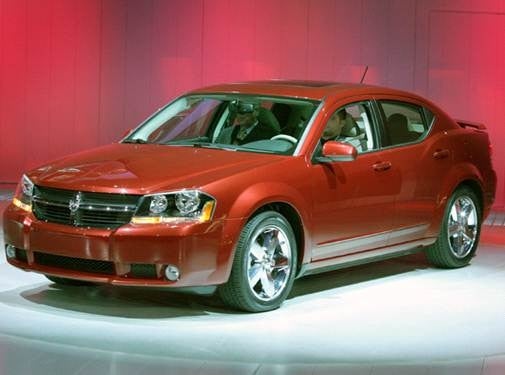
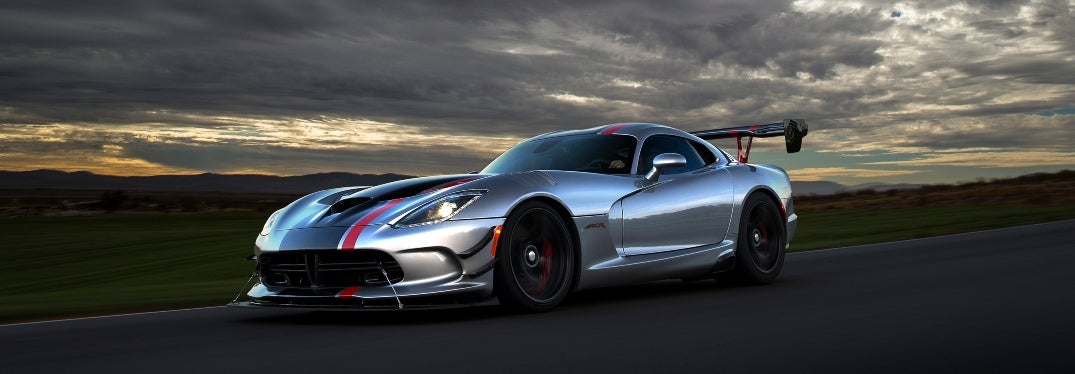
This is Benna CDJR’s second look at the top 50 Dodge models of all time as collected by the enthusiast site Autoevolution. This edition looks at the 31 - 40 best-ranked models. As mentioned in the first installment of this series, Dodge isn’t going anywhere, just two of its iconic models are, so this seems to be a good time to look at some of the brand's greatest models in its 95-year history. 40. 2007 Avenger R/T AWD Originally a Dodge Coupe version of the 2nd-generation Mitsubishi Eclipse, the Avenger came back in 2007 as a mid-size sedan replacing the Dodge Stratos. Like the coupe, the Avenger was based on a Mitsubishi Galant platform and built in the Chrysler - Mitsubishi joint venture Diamondstar plant in Normal, IL. All Avengers sported Charger-like styling, particularly with the kick-up character line just before the rear fenders. What puts this model on the list, however, was the R/T model’s combination of a 235 horsepower 3.5-liter V-6 and all-wheel drive, which made it stand out in the mid-size sedan class. Running the power through a 6-speed automatic transmission, and helped by AWD traction, the Avenger could transition from stop to 60 in 7.2 seconds. 39. 1940 WC-Series Remember that fast-moving ambulance heading into the M*A*S*H camp just as the music picks up in the show’s opening credits? That was a Dodge WC. Like the Jeeps often shown on that program, the WC was built for World War II in cooperation with Fargo, another Chrysler-owned truck company. Built in ½, ¾ ton and even six-wheeled 1½ ton versions, WCs took on the bigger jobs, including cargo trucks and weapons carriers, (radio) command cars, reconnaissance vehicles, carryalls, panel vans, telephone installation, mobile emergency/field workshop trucks, and of course ambulances. More than 350,000 WC were made through 1945, and together GPs (Jeeps) and WCs (sometimes nicknamed “Beeps”) made up nearly all the light-duty trucks used by the U.S. military during the war. 38. 1966 D/Dart Super Stock An arguable distant spiritual ancestor to the Hellcat and the current “Last Call” models, the D.Dart Super Stock was a factory-built drag racer designed to compete on the strips against other small-block V-8s of the time. The compact-sized D/Dart’s 273 cubic inch V-8 was pumped up to produce 275 horsepower. That is more than one horsepower per cubic inch. Only 50 models were built. It is somewhat overshadowed by the Dart LO23 that was stuffed with a 425 Hemi and occasionally a 440 ci. 37. 1974 Ramcharger Least known of the full-size 2-door SUVs, the Ramcharger came out five years after the full-size K5 Chevrolet Blazer, but three years before the full-size Ford Bronco. Like its competitors, the Ramcharger was built on a short wheelbase version of the brand’s full-size pickup. The top was removable, and there was even a cloth top available for a while. It started as a 2-seat hauler, but a second row of seats was added two years later. While the base model was powered by the venerable 225 slant-six, from there, it was all V-8s in 318, 360, 400, and 440 cubic inch sizes. There was an identical Plymouth version of this vehicle called the Trailduster, marking one of the only times a truck was offered by that brand. There were two generations of Ramchargers spanning 20 years. 36. 2003 Neon SRT-4 The Neon SRT-4 is another example of Dodge making a hellion out of an ordinary sedan. While most 2nd-generation Neons were available with either 132 or 150 horsepower, the SRT-4 (Street and Racing Technology-4 cylinder) was a concept model developed by DaimlerChrysler's PVO (Performance Vehicle Operations) in-house tuner group to originally produce 208 hp using a supercharged 2.0-liter. By the time of the 2003 production model debut, it featured a 215 horsepower turbocharged 2.4-liter inline-4, which was bumped up to 230 hp the following year. The model proved more popular than Dodge expected. Originally expecting to sell just 2,500 per year, over 25,000 models were sold across three model years. 35. 1964 D-100 Street Wedge The D-100 Street Wedge is arguably the first factory muscle truck. Based on the plain but hard-working D-100s that normally ran on the 225 slant-six or 318 V-8. This model was powered by a predecessor of the famed 426 Hemi known as the 413-cubic-inch Max Wedge V8. known as the “Ramcharger”, the first use of the name. Chrysler developed the engine specifically for drag racing among its full- and mid-size cars. Rated at 365 horsepower and 470 lb-ft of torque, it was the most powerful truck at the time though Dodge only built 50 of them, just enough to meet NHRA requirements. 34. 2009 Challenger Drag Pak This is yet another factory-built drag racer. The Challenger just had its return the prior year, and Dodge was heavy into nostalgia with a series of special edition models that were homages to famous Dodges of the muscle car years. The Drag Pak was the only one that wasn’t street-legal. The lack of production use enabled Dodge to shave 1000 pounds off the car. There were three engine options, including a 5.7-liter Hemi, 6.1-liter Hemi, and a 5.9-liter Magnum Wedge. An initial run of the required 50 cars was completed to meet NHRA requirements, though over 100 Challenger Drag Pak" vehicles were eventually produced. 33. 1978 Li'l Red Express To understand the Li’l Red Express, one must understand the late 70s. Emission requirements were detuning muscle cars out of existence. But those requirements did not apply to trucks. So Dodge started producing a line of “adult toys” in truck form. The Macho Power Wagon was a 4x4 truck with fat tires, a factory roll bar, and a wild two-tone paint job. The Warlock had a step-side bed, aftermarket wheels, gold pinstriping, bucket seats, and fat white-letter tires. The Li’l Red Express beat them all in audacious styling. The step-side bed had oak sideboards, and roof-high semi-like exhaust pipes rose between the cab and rear fender. All models were red with a large, gold company logo-like Li’l Red Express Truck sign on the doors. The Express was powered by the 360 ci V-8 producing 225 horsepower, which seems paltry today but was more powerful than anything but the Corvette at the time. 32. 2006 Magnum SRT-8 Ironically, it was the Dodge Caravan minivan that fired the first crippling blow at the venerable station wagon body style. In the subsequent 20 years, both minivans and SUVs had pretty much sealed the wagon’s fate. But with its LX platform derived from Daimler’s Mercedes E and S-Class, Dodge figured they had just the right ingredients to revive the All-American full-size RWD wagon. This being Dodge, it was just two years before they created a halo muscle car version with a 6.1-liter HEMI V8 engine good for 425 horsepower mated to a 5-speed automatic that also came from Mercedes. The drivetrain was good for a 0-60 time of just 5.1 seconds and hit the quarter mile in 13.1 seconds at 108 mph. Brembo brakes brought things back to a stop. All Magnums remained niche vehicles as Americans continued to flock to SUVs, and the wagon was discontinued in 2008. 31. 2007 Charger Daytona It didn’t have a roof-high wing, but Dodge’s homage to its iconic NASCAR warrior almost 3-decades earlier was a looker. With a moderate altitude black rear wing, blacked-out rear, mostly black hood with “HEMI” cut out on each side, rear ‘70 ‘Cuda-like black stripes, and 20-inch chrome five-split-spoke wheels, this charger was not subtle. That is even before you consider the roster of Dodge’s famous amusingly named colors, such as Sub Lime Green, Plumb Crazy Purple, and Top Banana, plus a few new ones, such as Go ManGo!, Stone White, and HEMI Orange. Mechanically the Daytona was basically an R/T with ten more horses thanks to a more free-breathing exhaust system, for a total of 350. In 2009 the power increased to 368 thanks to a new variable valve timing system. While not as potent as the SRT models, its tribute to vehicles colors and imagery of the muscle car era paved the way for many many of the current “Last Call” models Stay tuned as the Benna CDJR blog continues this series with the 21-30 ranked best Dodge models.