Benna Chrysler Dodge Jeep Ram

Blog / Dodge

2022 Dodge Durango R/T in Hemi Orange is a Hot Look

2022 Dodge Durango Hemi Orange

A new vehicle with a familiar face is the 2022 Dodge Durango R/T with a hot exterior accent color. Some of us love the opportunity to add flair to our Durango R/T, separate from the traditional colors. 

The third-row Dodge Durango R/T 2022 model offers a hot new look. It is not an exterior color; instead, it is an accent design available for all colors. The accent color is Hemi Orange, providing a unique vision for the impeccable Durango R/T.

Visit Benna CDJR to see the combination of exterior colors and lined Hemi Orange. Contact us to set up an appointment.

2022 Dodge Durango R/T Exterior Colors

There are four exterior colors that you can add to the Hemi Orange motif. The design is available through the Orange Plus and Hemi Orange To N Go packages. All exterior colors allow you to express yourself. You can also add more features to the Hemi Orange accent color. Here are the exterior colors of the 2022 Dodge Durango R/T:

  • Destroyer Grey
  • Diamond Black
  • Octane Red
  • White Knuckle

The Orange Flair Looks Familiar

If the orange hue looks familiar to you, that is due to last year’s orange debut on the Dodge Challenger and Charger.

Dodge Durango R/T Engine Specs and Hemi Orange 

The mighty V-8 Hemi engine powers the Durango R/T. The engine is nicely paired with a standard TorqueFlite eight-speed automatic transmission that gives 360 hp and 390 lb-ft of torque. The Durango is the next to debut the Hemi Orange design. Its exterior Hemi Orange accent differs from the Gunmetal hood stripes. It is also different from other oranges, such as exterior badging, taillight, etc. 

The interior is not forgotten. There is plenty of Hemi Orange throughout with stitching on all three-row seats. A splash of Hemi Orange on the instrumental panel, door panels, armrests, center console lid, and more. You can also select monochromatic Dodge Rhombi logos embroidered on the seats

Make your soon-to-be Durango R/T Hemi Orange unique from others. Add a personal touch with one of the various Orange additions and Hemi packages.

Order Your Durango R/T Hemi Orange from Benna CDJR

There is no set date for the 2022 Dodge Durango R/T Hemi Orange; however, it will arrive later this summer. Therefore, we encourage you to order the Durango R/T Hemi Orange the way you want it with us. 

Our team at Benna CDJR can help you select the right Durango R/T, Hemi Orange accents, packages, and more.

We are here for you when it is time for your oil change, wipers, brakes, suspension, replacements, and more. Our service department is run by knowledgeable technicians you can trust.

Our parts department can order genuine Dodge parts if you need a new part replacement. You never have to look elsewhere. We have the skills, service, and passion for taking care of your Dodge vehicle like it was our own.

Connect with us to chat about the Durango R/T Hemi Orange or any Dodge that piques your interest.

Posted in:

Related Posts

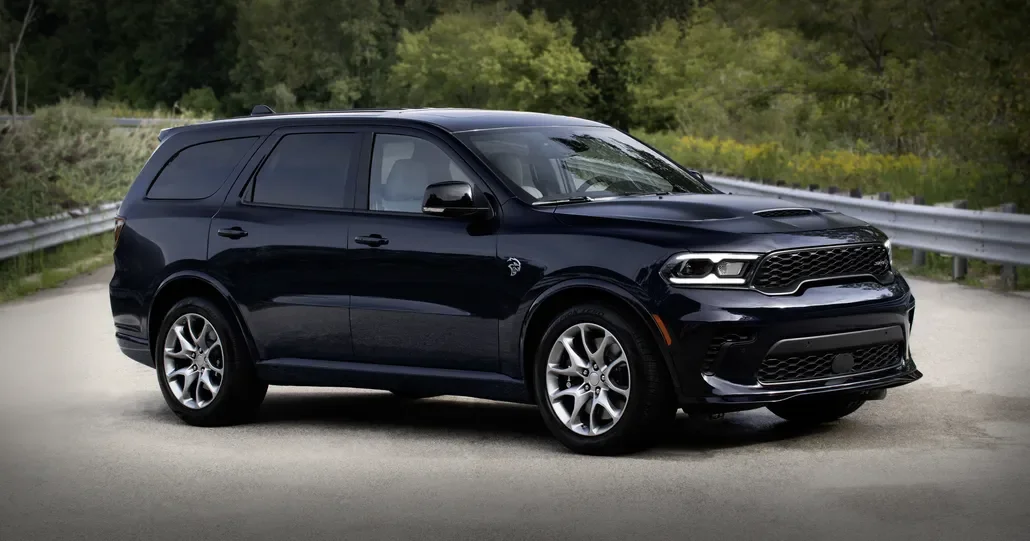
DG025_011DU_converted-1

What’s New For 2025 With The Dodge Durango

There is certainly no shortage of crossovers and SUVs on the market. In fact, the Jeep brand here at Benna Chrysler Dodge Jeep Ram (CDJR) consists entirely of crossovers and SUVs plus the Gladiator pickup. There are also plenty of 3-row crossovers from which to choose. However, if you are a muscle car fan looking for a powerful SUV, you look to THE muscle car brand, Dodge, and most specifically, the Dodge Durango. Dodge bolsters that reputation with the changes to the 2025 Durango, which is the subject of this Benna CDJR blog. The Durango enters the 2025 model year with GT, R/T, and SRT Hellcat trim levels, each with its own bespoke engine. Several special edition models will also be available, including the Durango R/T 20 th Anniversary and three special-edition versions of the Durango SRT Hellcat. Two Powertrains and One Monster The GT is the entry into the model line. It has the award-winning 3.6-liter Pentastar V-6 engine, rated at up to 295 horsepower and 260 lb.-ft. of torque. The engine is mated to an 8-speed automatic transmission. In RWD form, the Durango has an EPA estimated city/highway/combined mpg of 18 / 25 / 20. With all-wheel drive, the mpg is estimated at 17 / 24 / 20. One step up is the Durango R/T, which comes standard with a 5.7-liter HEMI producing a best-in-class 360 horsepower and 390 lb.-ft. of torque. The engine features cylinder deactivation, which seamlessly alternates between smooth, high fuel economy, four-cylinder mode, and V-8 mode when more power is needed. The 8-speed automatic is also matched to this engine, and both RWD and AWD versions have the same EPA mpg estimates of 14 / 22 / 17. Finally, there is the SRT Hellcat. Those familiar with Dodge or even just performance car nomenclature know that SRT Hellcat means this trim is powered by a 6.2-liter HEMI Hellcat V-8 engine. In this state of tune, it produces 710 horsepower and 645 lb.-ft. of torque. That is enough to move this 3-row SUV from 0 to 60 in 3.5 seconds and go on to reach the quarter mile in an NHRA-certified 11.5 seconds. It also has a top speed of 180 mpg. This is more than just a big V8 with a supercharger. High-performance features of this engine include: A dedicated cooling circuit for the charge air coolers integrated into the supercharger housing, including a pump, coolant reservoir, and heat exchanger, designed to keep air flowing into the engine cooler than 140 degrees Fahrenheit. Twin-screw rotors in the supercharger are set close to minimize air leakage and ensure maximum performance. An integrated electronic bypass valve regulates boost pressure to a maximum of 11.6 psi (80 kPa). The 2.38-liter supercharger has a drive ratio of 2.36:1 and a maximum speed of 14,600 rpm. A cast-iron engine block with water jackets between the cylinders for optimal cooling Forged-steel crankshaft with induction-hardened bearing surfaces Specially tuned crankshaft damper burst tested to 13,000 pm High-strength, forged-alloy pistons Powder-forged connecting rods with high-load-capacity bushings and diamond-like, carbon-coated piston pins Piston-cooling oil jets Heat-treated aluminum-alloy cylinder heads Sodium-cooled exhaust valves, hollow-stem intake valves, and steel-alloy heads that stand up to temperatures as high as 1,652 degrees Fahrenheit (900 degrees Celsius) Cold-air scoop in the lower front fascia helps feed the supercharger and the Hellcat engine’s 92-mm throttle body. Exhaust system tuned to deliver a throaty Dodge DNA sound TorqueFlite 8HP95 eight-speed automatic transmission includes steering-wheel-mounted paddles for manual-style shifting and has seven available Drive modes – Auto, Sport, Track, Snow, Tow, Eco, and Valet. Muscular Styling Outside, the Durango wears its performance focus with distinctly muscular styling derived partly from the recent Charger model. The forward-leaning profile includes Dodge DNA design cues on the front, including slim LED low/high headlamps, LED daytime running lamp (DRL) signatures, an iconic crosshair, and a grille. Down the side is muscular surfacing, a rear spoiler, and a variety of wheel options. The dash is clearly driver-centered, with a center stack angled 6 degrees toward the driver. The 10.1-inch touchscreen is powered by the critically acclaimed Stellantis Uconnect 5 operating system with Durango-specific graphics. The SRT Hellcat features exclusive performance-themed graphics. 2025 Special Editions There will be four Durango Special Editions for 2025: R/T 20th Anniversary – Honoring 20 years of bringing back the HEMI engine, this special edition model includes: Black HEMI hood graphic​ “345” fender badging with Brass Monkey accents 20-by-10-inch Y-spoke forged lightweight Brass Monkey wheels​ SRT seats featuring distinctive Tupelo bronze-like stitching accents and “345” embroidered on seatbacks Black exterior badging The tow N Go package adds performance-tuned steering, adaptive damping suspension, Brembo brakes, active exhaust, and an 8,700 lb. towing capacity. Black six-piston Brembo brake system ​ Premium wrapped instrument panel and forged carbon-fiber interior accents​ Second-row captain’s chairs SRT Track Experience featured for the first time on a Durango R/T and exclusive to the 20th Anniversary Edition There will be three Special Edition versions of the SRT Hellcat, including: SRT Hellcat Silver Bullet – Wearing an exclusive Triple Nickel exterior color, this model features: Satin Black painted hood​, featured for the first time on a Durango Grey metallic SRT Hellcat badging Satin Black Dodge taillamp badge SRT black exhaust tips ​ Red six-piston Brembo brake system ​ 20-by-10-inch Lights Out finished wheels ​ Ebony Red Nappa leather seats​ — featured for the first time on a Durango SRT SRT Hellcat logo accented with sepia stitch and embroidered on seatbacks Premium wrapped instrument panel and forged carbon-fiber interior accents Suede steering wheel embellished with silver and sepia accent stitching Suede headliner Dual silver and sepia accent stitching throughout the interior SRT Hellcat Hammerhead – Taking its name from its distinctive hammerhead Grey leather interior, paired with a Dark blue Night Moves exterior. Hammerhead features include: Sepia SRT Hellcat logo embroidered on seatbacks 20-by-10-inch Satin Carbon wheels Satin Black painted hood Bright exhaust tips Black six-piston Brembo brake system Premium-wrapped instrument panel Forged carbon-fiber with light black chrome interior accents Leather and suede steering wheel featuring silver/sepia stitching Dual silver/sepia accent stitching throughout the interior Suede headliner SRT Hellcat Hammerhead Brass Monkey – The most colorfully named of the four special Editions takes its moniker from the dark bronze 20-by-10-inch Brass Monkey wheels, which are matched by Brass Monkey exterior badging. The exterior is Red Oxide with Sepia Laguna leather seating. Other Brass Monkey features include: Silver SRT Hellcat logo embroidered on seatbacks Leather and suede steering wheel featuring silver/sepia stitching Satin Black painted hood Black six-piston Brembo brake system Black exhaust tips Dual silver/sepia accent stitching throughout the interior Premium-wrapped instrument panel Forged carbon-fiber with light black chrome interior accents Suede headliner If you are looking for a large SUV with the power to thrill on any surface, contact Benna CDJR and inquire about your favorite of the 2025 Durango model line.

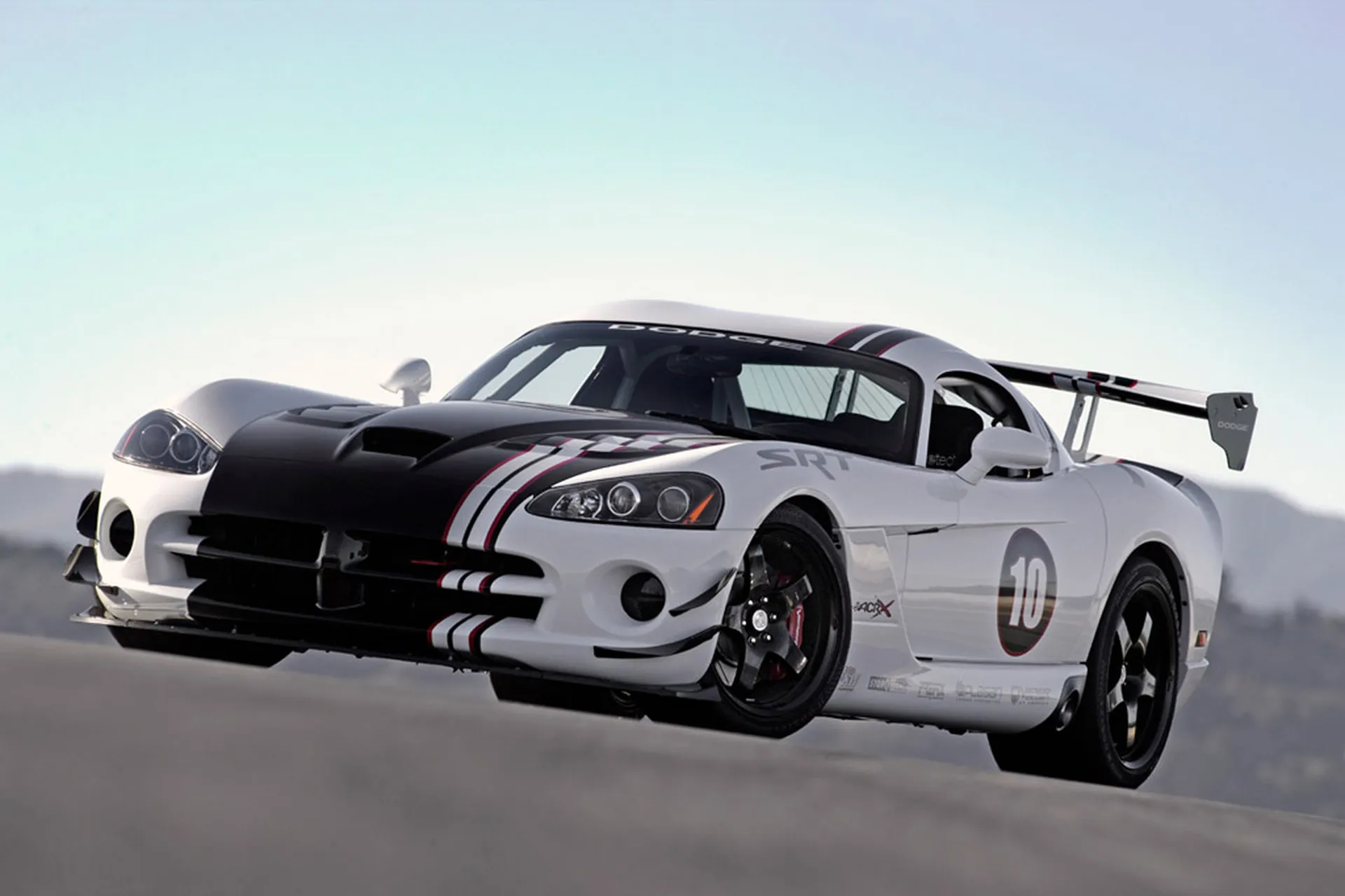
2010_dodge_vipersrt10acrx1_full-view-web

The 10 Best Dodge Models of All Time (Part 5 of the Top 50 Dodge Series)

This is where the arguments start. Because where it is one thing to argue if a top 32nd rank vehicle belongs in the number 25 slot, it is another to decide the top ten models of any brand, much less one with a 123-year history. Benna CDJR didn’t determine the top 10. As with all previous versions of this series, the selections were made by the Autoevolution website. So, here we go with the top 10 Dodges of all time. 10. 1970 Challenger Hemi Though Dodge was busy in the 60s putting high-powered engines in smaller vehicles, they did not have a pony car competitor until 1970, five years after the launch of the Mustang and Barracuda. Though its body looked much like the 3rd generation Barracuda with which it shared a platform, the Challenger had a two-inch longer wheelbase (110”) and was positioned against the upper end of the pony car class such as the Cougar and Firebird. An astounding eight engines were offered, including two “Slant-6”s: and six V-8s. The most coveted is the 425-hp 426 Hemi. It wasn’t so much the cost of the engine but the cost to insure a Challenger with it that resulted in only 356 out of 77,000 Challengers sold being equipped with the legendary engine in its initial year. The rarest? Hemi convertibles, only 9 of which were made. The fun lasted through 1971, after which the high-performance V-8s were discontinued. The Challenger itself was discontinued after 1974. 9. 1966 Charger Hemi Let's start by saying that no matter how it was powered, the 1966 Charger may well be the most attractive design to wear a Dodge badge. Preceded by the 1965 Charger II show car, the production model actually looked better with the extraordinarily clean front styling due to retractable headlights that created a full-width grille echoed by full-width tail lights in the rear. The show car’s dramatic fastback roofline resulted in an absurdly long rear overhang, which was sensibly curtailed in the production car. The dash featured four prominent gauge pods, and the center console extended through the back to create 2nd-row bucket seats. Those seats also folded down to extend the cargo space, an uncommon feature at the time for a non-station wagon. The car was really more of a luxury fastback than a full-on muscle car, except that five V8 engines were on offer, including the mighty 440 Magnum and the legendary 425-hp 426 Hemi, of which just 468 units were sold in the first year. 8. 2021 Charger SRT Hellcat Redeye The Challenger and Charger of this generation share a platform, so when Dodge made news by putting the 707-hp Hellcat engine in the Challenger, dropping it in the Charger also probably wasn’t all that…well…Challenging. However, creating a 707-hp 4-door sedan was completely audacious, which is familiar ground for Dodge. In 2021 they stoked the fires, further taking the Challenger’s Redeye engine and creating the 797-hp Charger Redeye, which has easily become the most powerful Charger in history. 0 to 60 is reached in just 3.5 seconds, the quarter mile takes just 10.6, and it has a top speed of 203 mph. If a faster Charger is ever made from the factory, it won’t be gasoline powered. 7. 2019 Challenger SRT Hellcat Redeye Whatever the point was, Dodge had already proved it with the 2015 Challenger Hellcat, astounding the industry with its supercharged 6.2-liter V8 producing 707 hp. The previous most powerful Challenger was quite competitive, producing 470 horsepower, so the Hellcat was a bit of a bump. And it instantly became the most powerful muscle car of all time. Neither Ford nor GM countered, so Dodge could have stopped there. But a supercharger could get another 90 horses out of the 6.2 V-8 and a total of 707 lb-ft of torque, so they put it into production just to beat their own record. Its performance figures are very similar to the similarly-powered Charger with a 10.8-second quarter mile and 203 mph top speed. 6. 2004 Ram SRT-10 We used the term “audacious” previously, but maybe we should have saved the term for this model. Because while this series has mentioned other Dodge sport trucks like the Lil' Red Express, the Rumble Bee, the Daytona, and the Power Wagon, none of them match the Ram SRT-10, which had the Viper V-10 under its tall scooped hood. Unlike the supercharged Challenger and Charger engine just discussed, the 8.3-liter Viper V-10 was normally aspirated, so its 500 horsepower and 525 lb-ft of torque don’t quite have the same eye-raising ability as they did back in 2004, where there simply was nothing like the Ram SRT-10. Chevy never put a Corvette ZR-1 engine in a Silverado. The short-cab, short-bed truck hauled up to 60 mph in 4.9 seconds and had a top speed of 154 mph. The truck was given a sport suspension, rear wing, and heavily bolstered front seats. Together with a quad-cab version that was also provided, the audacity lasted for three years, with 10,143 units sold. 5. 2020 Challenger SRT Super Stock By 2020, Dodge had managed to squeeze another 10 horsepower out of its 6.2-liter supercharged Hellcat Redeye V8 for a total of 807. Returning to its Super Stock efforts in the 60s, Dodge outfitted this as a drag-race special with lightweight wheels, drag radial tires, a shorter final-drive ratio, and a drag-spec suspension with adaptive dampers. This brought the performance numbers down to 3.25 seconds for 0 to 60 and a standing quarter mile of 10.5 seconds. 4. 1969 Charger Daytona Most Dodges have made these lists because of what’s under their hood and their focus on drag racing. This car is clearly best known for how it looks, and its purpose was purely aimed at NASCAR. In 1968, Dodge tried to rule NASCAR with the homologation Charger 500, which featured subtle aerodynamic changes. Appearance-wise, the 500 actually appeared tamer than the production car, and it still didn’t knock the slippery Ford Torino off the NASCAR pedestal. Getting serious, Dodge added the sloping nose and sky-high wing to the 1969 Charger and made 500 of them for the street to get it on the track. Most production models were powered by the 440 cubic inch magnum while just 70 had the 426 Hemi. It and the similar Plymouth Superbird were the first overtly aero-focused models in the series. Oddly, the height of the wing was not dictated by aerodynamics but rather so the trunk lid could be raised on the production model. Bobby Issac drove his Daytona to a season record that stands to this day with 19 pole positions and 17 wins. 3. 2018 Challenger SRT Demon One could argue that the Hellcat and all hyper Challengers that followed were drag-race specials, but the SRT Demon was even more so. Prior to the Supers Stock, the SRT Demon’s 6.2-liter V8 was topped with a 2.7-liter supercharger which produced 808 horsepower, or 840, with 100+ octane fuel. Drag-race-focused features included a trans brake, a Drag Mode suspension setup, and a liquid-to-air intercooler. It hit 60 mph in 2.3 seconds and went on to the quarter mile in 9.68 seconds. It was the fastest accelerating vehicle ever produced, and it only lasted one year, of which 3,300 units were produced. 2. 2010 Viper ACR-X A decade and a half prior to the Supercharged Hellcat, Redeye, and Demon Challengers, Dodge’s performance centered on the big displacement, normally aspirated Viper. The racing focus was not on the dragstrip but on sportscar and endurance racing, where you saw the Viper on the podiums of LeMans, Daytona, Spa, and others with over 100 major wins. By 2010, the Viper had been on the market for 20 years, was in its fourth generation, and looked to be ending its production. Which it did for three years before having another go for four years after 2013, The ACR-X was a production vehicle but for the track only. Free of street-legal restrictions, the 8.4-liter V10 produced an additional 40 horses for a total of 640 with torque up 45 foot-pounds to 605. It was fitted with a roll cage, fuel cell, a single racing seat with harness, and 18-inch front / 19-inch rear Michelin slicks. It weighed 160 pounds less than the street-legal ACR, while the rear wing, front dive planes, and other aerodynamic enhancements created 1100 pounds of downforce at 150 mph. It set no fewer than 13 lap records around the world and lapped the Nurburgring Nordschleife in 7:03 minutes. 1. 2023 Challenger SRT Demon 170 Isn’t it nice that the number one greatest Dodge is one that is for sale right now? It’s Dodge’s final send-off to the nameplate that had four years in its original form and came back 34 years later for another 15. It is also the send-off for gas-powered muscle cars in general, with both the Challenger and Charger leaving after 2023 with to be replaced by various electric and electrified vehicles in the years to come. This last in a series of “Last Call” Challenger and Chargers has a feeling of inevitability as its horsepower finally breaks four figures. At least with E85 ethanol, where its supercharged V8 is rated at 1025 horsepower and 945 lb-ft of torque. Fuel it with premium from your corner station, it will produce 900 hp. That gets you to 60 in a 2G body-pressing 1.66 seconds and will trip the quarter mile in an NHRA-certified 8.91 seconds. And yet it’s street legal. Perhaps, EV technology will open a whole new world of Dodge outrageousness, but for a company that has spent much of its R&D building absurdly overpowered vehicles and selling them to people, the 2023 Challenger SRT Demon 170 is the greatest Dodge ever sold.

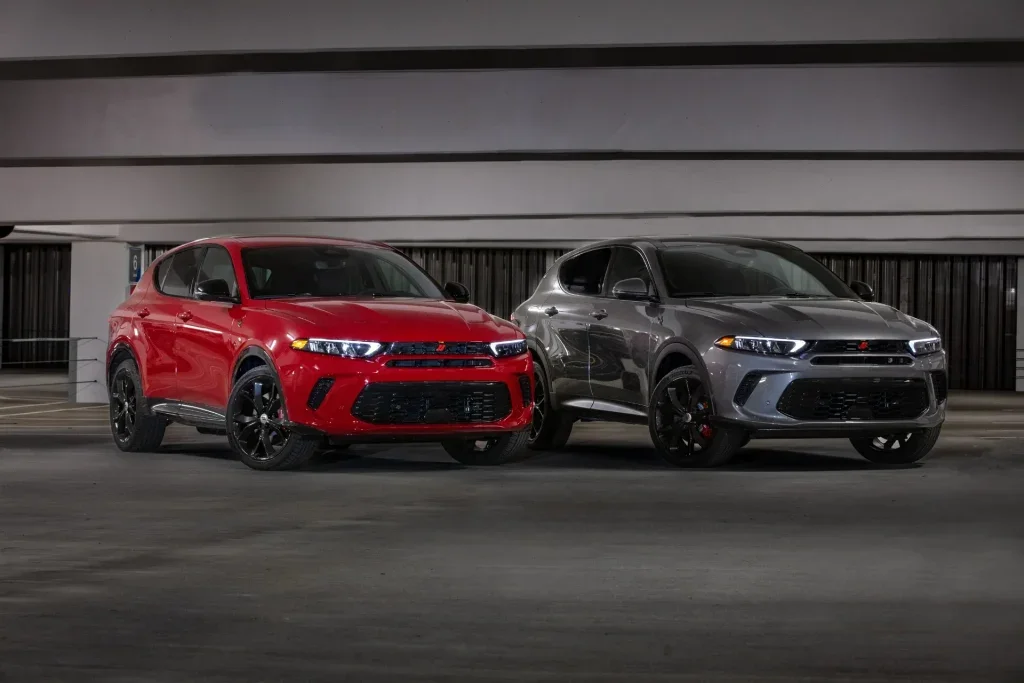
What’s New For 2024 Dodge Hornet

Dodge entered the popular compact crossover segment this past year with the introduction of the 2023 Dodge Hornet.  2023 models arrived in the Benna Chrysler Dodge Jeep Ram inventory late in the 2023 model year.  In typical Dodge fashion, they brought to the segment its most powerful gas engine and a distinct performance focus to its overall design.  Now come the 2024 models, which add the Hornet R/T. This plug-in hybrid represents the first-ever electrified vehicle from Dodge and the most powerful model in the Hornet lineup. Bringing Performance to the Compact Crossover Segment The Hornet GT and GT Plus carry one with the Hurricane4 2.0-liter turbocharged inline-4 connected to a 9-speed automatic transmission. It is the segment’s most powerful gas engine producing 268 horsepower and 295 lb.-ft. of torque. EPA-estimated city/highway/combined MPG is 21/29/24. For 2024, the Hornet lineup adds the R/T and R/T Plus plug-in hybrid models. The engine is a 1.3-liter turbocharged inline-4 connected to a 6-speed automatic that powers the front wheels. Powering the rear wheels is a 90-kW electric motor that receives its energy from a 15.5-kWh lithium-ion battery pack. Combined, the engine and motor produce 288 horsepower and 383 lb-ft. of torque. The model provides an estimated 32 miles of electric-only range. So if your daily round-trip commute is within that distance, the Hornet R/T can be a daily electric vehicle.  After the electric range is depleted, there remains battery power to assist the engine.  The Hornet R/T is rated at 77 MPGe and has a total range of 360 miles. The “Head of Hive” 2024 Dodge Hornet R/T carries extra sting with a class-exclusive, on-demand PowerShot feature that supplies a 15-second burst of 30 horsepower, enabling a run from 0 to 60 mph in 5.6 seconds, while the Dodge Hornet GT reaches 0 to 60 mph in 6.5 seconds in Sport Mode. Hornet performance goes beyond mere acceleration. All models in the lineup feature standard Koni shocks and Brembo four-piston brake calipers. The models also include torque vectoring to assist in fast curves, and of course, all R/T models feature all-wheel drive. Activated by a steering wheel button, the Hornet GT features a Sport Mode, which increases throttle response, shifts at higher rpm, tightens steering wheel feel, and provides a stiffer suspension setting if equipped with Dual Stage Valve shocks.  The Hornet R/T offers Sport Mode and three hybrid driving modes: Hybrid, Electric, and E-Save Hybrid Mode: Provides maximum combined efficiency of the engine and motor, minimizing fuel consumption by setting electric priority until a minimum battery level is met Electric Mode: Offers an all-electric, zero-emission mode, and automatically switches to hybrid when the battery is depleted or when extra power is requested by driver pedal kick-down E-Save Mode: Gives priority to the conventional engine to preserve battery charge, possibly to save for city driving when all-electric propulsion is its most efficient.  The Passive option maintains the existing charge, while the Active option will recharge the battery as you drive. Sport Mode: Activated by a dedicated button on the center console, this produces sharper throttle response, higher shift points, access to the hybrid system’s optimized power and torque, as well as a tighter steering feel. The Hornet R/T also recharges the battery from regenerative braking and coasting from the throttle lift. The regenerative braking also reduces brake wear. Packaging All Hornets are equipped with a 12.3-inch Digital TFT Cluster, 10.25-inch center touchscreen and dual-zone automatic climate control wireless phone connectivity, and blind spot warning, among other features.  Also standard is Active Driving Assist which includes Distance Pacing Cruise Control, and lane centering. Besides the drivetrain, additional standard features on the R/T model include: Heated front seats 8-way power driver seat with 3-way memory Driver-side auto-dimming mirror Remote start system The R/T Plus adds: Full leather seating surfaces 8-way power passenger seat Ventilated front seats Sunroof Harmon Kardon sound system Hands-free power liftgate The GT Plus basically adds all of the additional R/T and R/T Plus features. Three packages are available on both Hornet R/T and GT: The Blacktop Package brings to life an automotive version of a “murder Hornet” with a blacked appearance including: 18-inch Abyss alloy wheels Gloss Black badging and mirror caps Gloss Black painted daylight opening (DLO) molding The Track Pack offers the most performance-oriented configuration with: 20-inch Abyss wheels Dual Stage Valve Suspension Alcantara sport seats Aluminum interior accents and pedals Red brake calipers The Tech Pack builds on the Active Driver Assist system by adding: Highway Assist Traffic Sign Recognition Intelligent Speed Assist Drowsy Driver Detection Front-park sensors ParkView 360 camera Parallel and Perpendicular Park Assist The Hornet shows that as Dodge enters a new era of electrified and even EVs, Dodge's performance values remain steadfast.  It is obvious yet meaningful to call the Hornet the Dodge of compact crossovers. To see all of what that means, pay a visit to Benna Chrysler Dodge Jeep Ram and experience the Hornet for yourself.